

Which Rudraksha Should I Wear? A Decision Guide by Goal, Rashi and Chart
There is no single right bead for everyone, but there is a sensible order for choosing one. Start with what you want the bead for, check the chart factors astrologers traditionally read, and only then pick a mukhi and a form.
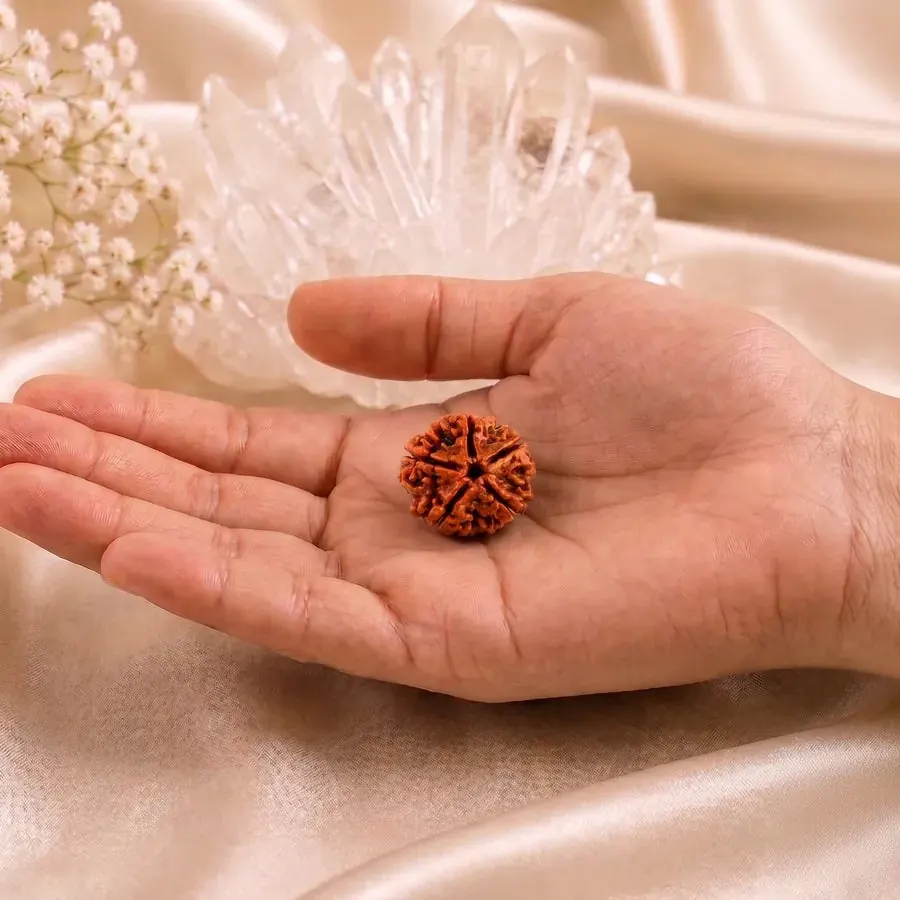
"Which rudraksha should I wear?" is a question most people ask after they have already seen a dozen lists that each give a different answer. One site says go by your zodiac sign, another says go by your problem, a third says only a full chart reading will do. They are not really contradicting each other: they are describing three different ways in. This guide puts them in order, so you can make a calm, reasoned choice in four steps, and it names only the beads Astroliya's store actually stocks, so you are not sent hunting for something we cannot show you.
The Short Answer: Start With the 5 Mukhi
If you have never worn a rudraksha and have no specific reason to pick another, the tradition's usual answer is the 5 Mukhi (panch mukhi). Classical lists associate it with Kalagni Rudra, a form of Shiva, and the astrological mapping many astrologers use links it to Jupiter (Guru), the planet of learning and good counsel. It is the bead most lists say almost anyone can wear, regardless of age, gender or rashi, and it is the bead most japa malas are strung from.
That makes it the sensible rudraksha for beginners for three practical reasons:
- It does not depend on getting your chart right. You do not need an exact birth time or a dasha reading to wear it.
- It suits the most common purpose. Most people want a bead for prayer, meditation, steadiness and a daily reminder, which is exactly what the 5 Mukhi is traditionally kept for.
- It is easy to find in a genuine form. Five-faced beads are the most common, so you are less likely to be offered a doctored one.
If that is all you need, you can stop here and read our full guide to 5 Mukhi rudraksha benefits. If you have a specific goal, or want a bead read from your chart, carry on.
Which Rudraksha Should I Wear? Decide in Four Steps
Online "rudraksha calculator" tools usually ask for your birth date and give you one mukhi. What they skip is the reasoning. Here is the order astrologers traditionally follow, written out so you can do it yourself.
- Name your purpose in one sentence. "I want to focus better while studying" is useful. "I want everything to go well" is not, because every mukhi will look like an answer.
- Check your Moon sign (rashi) and ascendant (lagna). In Vedic astrology both have a ruling planet, and each planet is traditionally paired with a mukhi. Our free kundli shows both.
- Check your running dasha. The planet whose mahadasha you are in colours the period you are living through. Many astrologers give that planet's bead extra weight, especially when the dasha feels hard.
- Choose among the beads that agree. If your purpose, your rashi and your dasha point to different beads, prefer the one that serves the purpose and fits a sign or dasha lord. If nothing agrees, the 5 Mukhi remains the neutral choice.
You do not need all four steps to agree before you wear anything. The steps exist so that, whatever you choose, you know why you chose it.
Step 1: Rudraksha by Goal
This is the table most people actually need: a common purpose, the mukhi tradition usually pairs with it, the deity and planet linked to that mukhi, and the form in which Astroliya's store carries it today.
| Your purpose | Mukhi tradition points to | Deity and planet commonly linked | Form Astroliya stocks |
|---|---|---|---|
| Daily prayer, meditation, a first bead | 5 Mukhi | Kalagni Rudra; Jupiter | Bead, 108-bead malas, bracelets |
| Study, exams, clear speech | 4 Mukhi | Brahma; Mercury | Single bead |
| Discipline, focus, steady effort | 6 Mukhi | Kartikeya; Venus | Single bead or pendant |
| Letting go, a fresh start, confidence | 3 Mukhi | Agni; Mars | Single bead |
| Steadier approach to money, a hard Saturn period | 7 Mukhi | Mahalakshmi; Saturn | Pendant |
| A new venture, clearing obstacles | 8 Mukhi | Ganesha; Rahu | Single bead |
| Courage, protection, Navratri devotion | 9 Mukhi | Durga; Ketu | Pendant |
| Inner stillness, serious spiritual practice | 1 Mukhi | Shiva; Sun | Pendant |
| Marriage, relationship and family harmony | Gauri Shankar | Shiva and Parvati | Lab-certified bead |
Two notes on reading this table. First, classical texts tie each mukhi more firmly to a deity than to a planet; the planet column is the later astrological layer many astrologers use, not settled doctrine. Second, a career is rarely one goal. Someone who wants a promotion may really be asking for focus (6 Mukhi), confidence (3 Mukhi) or patience through a slow phase (7 Mukhi). Our chart-first guide to rudraksha for career works through that distinction, and the Gauri Shankar guide covers the relationship question in detail.
Step 2: Rudraksha by Rashi
The second way in is your Moon sign. In the Parashari tradition each rashi has a ruling planet, and each planet has a traditionally paired mukhi. Use your Moon sign, not your Western Sun sign; if you do not know it, make your kundli first. Some astrologers also read the ascendant's lord the same way.
| Moon sign (rashi) | Ruling planet | Mukhi traditionally paired | In Astroliya's store |
|---|---|---|---|
| Aries (Mesha), Scorpio (Vrishchika) | Mars | 3 Mukhi | Yes, bead |
| Taurus (Vrishabha), Libra (Tula) | Venus | 6 Mukhi | Yes, bead and pendant |
| Gemini (Mithuna), Virgo (Kanya) | Mercury | 4 Mukhi | Yes, bead |
| Cancer (Karka) | Moon | 2 Mukhi | Not stocked; see below |
| Leo (Simha) | Sun | 1 Mukhi (some lists say 12 Mukhi) | 1 Mukhi pendant only |
| Sagittarius (Dhanu), Pisces (Meena) | Jupiter | 5 Mukhi | Yes, bead, malas and bracelets |
| Capricorn (Makara), Aquarius (Kumbha) | Saturn | 7 Mukhi | Yes, pendant |
To be straightforward about the gaps: Astroliya's store does not currently sell 2 Mukhi or 10 to 14 Mukhi beads. For Cancer, the 2 Mukhi is traditionally linked with Ardhanarishvara, the joined form of Shiva and Parvati; some people born under Cancer choose the Gauri Shankar instead because it carries the same Shiva-Parvati theme, while others simply wear the 5 Mukhi. For Leo, the 1 Mukhi is traditionally treated as the rarest bead and is usually kept for dedicated spiritual practice, so many Leo-born wearers start with the 5 Mukhi and come to the 1 Mukhi later, if at all.
For the sign-by-sign reasoning, with the second bead astrologers sometimes suggest for each rashi, read rudraksha by zodiac sign.
Step 3: Read Your Chart, Not Just Your Sign
A rashi table gives the same answer to everyone born under one Moon sign, which is roughly one person in twelve. A chart reading narrows it down. These are the factors astrologers traditionally weigh for a rudraksha recommendation:
- The running mahadasha. If you are in Saturn's 19-year dasha, many astrologers point to the 7 Mukhi; in Rahu's dasha, the 8 Mukhi; in Ketu's, the 9 Mukhi.
- Sade Sati or Shani dhaiya. Saturn's roughly seven-and-a-half-year transit through the sign before your Moon sign, the Moon sign itself and the sign after it is the most common reason people are told to wear a 7 Mukhi. When Astroliya's chart reading finds Sade Sati or dhaiya, the bead it suggests is the 7 Mukhi pendant. If you are unsure whether you are in it, read what Sade Sati is or see the Sade Sati report.
- The ascendant lord. Many astrologers treat the lagna lord as the planet of the self, and its bead as a safe, supportive choice.
- A weak benefic. If Jupiter, Venus or Mercury sits poorly in a chart, some astrologers suggest that planet's bead as a gentle support.
A worked illustration
This is an illustration, not a real person's chart. Meera has a Gemini Moon, a Sagittarius ascendant and is running Saturn's mahadasha. Her purpose: "I am preparing for a competitive exam and keep losing focus."
- Her purpose points to the 4 Mukhi (study).
- Her Moon sign, ruled by Mercury, also points to the 4 Mukhi.
- Her ascendant lord, Jupiter, points to the 5 Mukhi.
- Her Saturn dasha points to the 7 Mukhi.
Two of four factors agree on the 4 Mukhi, and it serves her stated purpose, so tradition would make that her first bead. If the Saturn period feels heavy, an astrologer might add a 7 Mukhi later; the 5 Mukhi remains a fallback that conflicts with nothing. Notice what decided it: the agreement between purpose and chart, not any one rule.
Bead, Pendant, Bracelet or Mala?
Once you know the mukhi, the form decides whether you will actually wear it.
| Form | Best for | Keep in mind |
|---|---|---|
| Single bead on a thread | Daily wear close to the body; a specific mukhi | Thread needs replacing; some people string it in silver |
| Pendant | Daily wear when you want it ready to put on | Astroliya stocks 1, 6, 7 and 9 Mukhi as pendants |
| Bracelet | A visible reminder; people who dislike neckwear | Stocked in 5 Mukhi only |
| 108-bead mala | Counting mantras; meditation | Mostly kept for japa rather than worn all day |
You can browse loose beads and pendants separately. If you plan to count mantras, our guide to mantra japa rules explains the mala itself.
What Each Astroliya Listing Says About Origin and Certificates
Certificate wording differs from listing to listing, so we quote each one rather than generalise. Read the listing itself before you order.
- 1, 3, 4, 5, 6, 7 and 9 Mukhi beads and pendants: each listing names Nepal as the origin; the 8 Mukhi and Gauri Shankar listings do not name an origin.
- 3, 4 and 5 Mukhi beads: the listings say each "comes with a certificate of authenticity".
- 6 Mukhi bead: the listing says it "is lab tested and comes with a certificate of authenticity".
- 8 Mukhi bead: the listing says it "comes with a lab certification for authenticity and identification".
- 1 and 7 Mukhi pendants: the listings say each "comes with certification for authenticity".
- 9 Mukhi pendant: the listing describes it as "fully certified".
- Gauri Shankar: one of the two Gauri Shankar listings is described as "lab certified".
A certificate is a useful reference, but it is not the only check. Our guides on how to identify an original rudraksha and what a lab certificate proves explain what to look at yourself.
What a Rudraksha Recommendation Does and Doesn't Mean
A good recommendation tells you which bead the tradition would point to for your purpose and chart, and why. It does not mean:
- That the wrong bead will harm you. Tradition offers mukhis as supports, not as switches. A bead that does not match your chart is simply less specific.
- That you must wear several. One well-chosen bead, worn with attention, is the usual starting point.
- That a bead will produce a job, a marriage or money. Classical texts present rudraksha as an aid to devotion and discipline. Results come from what you do, and nobody can promise an outcome; there is no guarantee attached to any mukhi.
- That you should stop treatment or advice. If your purpose is health, debt or a legal matter, wear the bead alongside proper help, never instead of it.
Wearing customs vary by family. Many people start on a Monday, Shiva's day, after a bath, with a short mantra such as "Om Namah Shivaya"; follow your family's or temple priest's practice where it differs.
Questions people ask
Can I wear a rudraksha without checking my kundli?
Yes. The 5 Mukhi is traditionally treated as suitable for almost everyone without a chart reading. A kundli helps only when you want a more specific bead, such as one matched to your rashi or running dasha.
Is a rudraksha calculator accurate?
A calculator can only apply a fixed rule, usually your Moon sign's ruling planet. That is a reasonable starting point, but it cannot weigh your purpose, ascendant and dasha together the way the four steps above do. Treat any single answer as a suggestion, not a verdict.
Can I wear two different mukhis together?
Many people do, and tradition generally allows combinations; the 5 Mukhi in particular is often paired with another bead. Start with one, and add a second only if you have a clear reason for it.
Which rudraksha should a beginner wear first?
The 5 Mukhi, for the reasons above: it suits most purposes, does not depend on chart details and is the easiest to find genuine. Once you have worn it for a while, you can decide whether a more specific mukhi is worth adding.
Which rudraksha is good for Sade Sati?
Astrologers most often suggest the 7 Mukhi, because tradition links it with Saturn. It is a devotional support during the period, alongside practices such as a sesame-oil lamp on Saturdays, and it does not shorten or cancel the transit.
From the Astroliya store
Pieces for this guide
Chosen from our own store to go with what you just read.


