

Certified Rudraksha: What a Lab Certificate Proves, and What It Doesn't
The most a certified rudraksha report can establish is that the bead is a natural seed with the number of faces claimed. Where it grew, how old it is and whether it was ever energised sit outside what any scan can see.
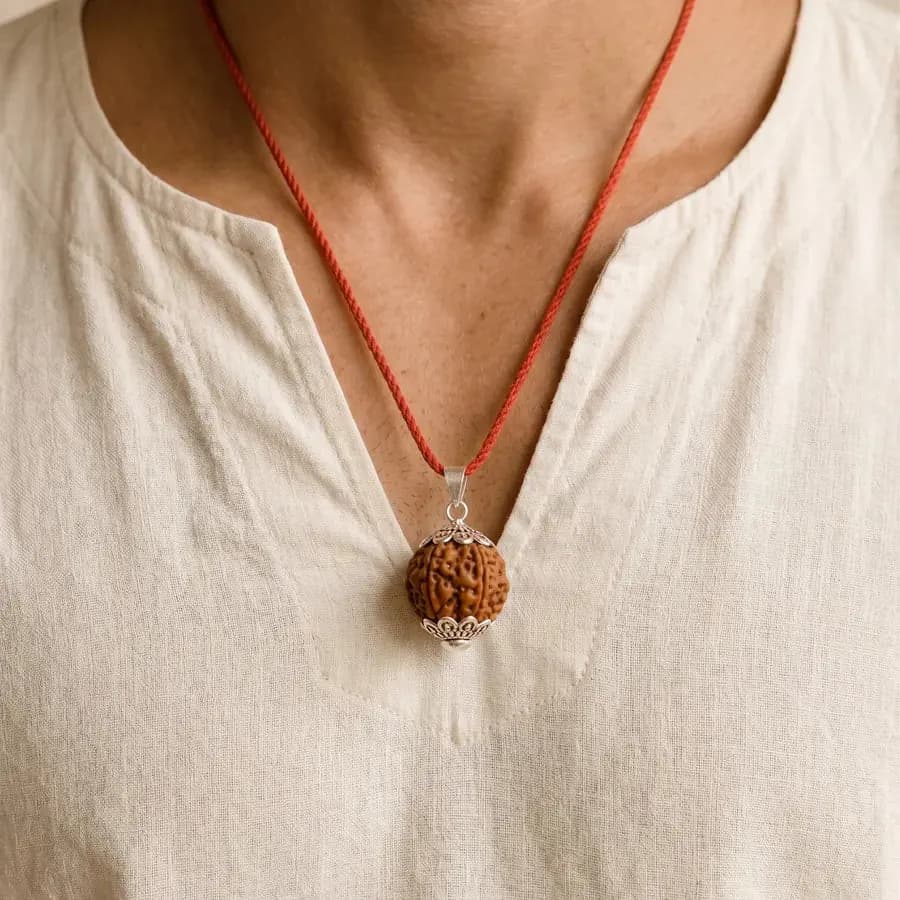
Almost every seller now calls their beads certified rudraksha, and the word has stopped meaning much on its own. A certificate can be a careful imaging report from a named lab, or a printed card that says "genuine" and nothing else. The useful question is not whether a bead has a certificate but what the certificate actually tested, who tested it, and whether it describes the bead you are holding. A report that names its lab, its imaging method and a report number you can quote back is a different object from a card with a seal and no issuer, even when both are sold as proof.
If you want the checks you can do at home first, counting lines and spotting carving, start with our guide on how to identify original rudraksha. This page picks up where those checks stop.
Quick answer
- A good certificate can show that a bead is a natural rudraksha seed, that its internal chambers match the number of faces (mukhis) claimed, and that it has not been visibly carved, filled or joined.
- No certificate can prove the country a bead grew in, its age, or that it has been energised, blessed or made "siddh". Those are claims about history or ritual, not things a scan can see.
- Read it for specifics: an issuer you can identify, a method named (x-ray, CT or another imaging test), a report number, and a photo, size and weight that match your bead.
- The wording matters. "Certificate of authenticity", "lab tested" and "fully certified" are different claims. Ask what was tested.
What a certified rudraksha certificate can actually prove
A rudraksha is the dried stone of a fruit. Each mukhi, the natural line running from one end of the bead to the other, sits over a compartment inside the seed, and a genuine bead usually has as many internal chambers as surface lines. That relationship is what makes imaging useful: it is the one check that looks at the outside and the inside together.
What an x-ray rudraksha report shows
An x-ray or CT image shows the internal seed chambers as separate compartments. A reader counts them and compares the count with the lines on the surface. When the two agree, the bead is far more likely to be natural and correctly described. When a bead sold as 7 mukhi shows six chambers, one of its lines has probably been cut in by hand.
Imaging can also show things the eye misses:
- Joins. Two beads glued together to look like a Gauri Shankar, or two halves of different beads, show a seam or a mismatch in the internal structure.
- Filler and inserts. Resin, metal or other material packed into a carved line, or a weight added to make a bead sink, looks different from natural seed tissue.
- Moulded fakes. Resin or wood shaped to look like a rudraksha has no natural chamber structure at all.
What a good lab report records
Beyond the scan, a careful report records the bead's physical details: its dimensions in millimetres, its weight, its colour and shape, the number of mukhis, and a photograph of the actual bead. These details are not decoration. They are what lets you tie the paper to the object in your hand.
What a rudraksha certificate cannot prove
This is where most buyers are misled, usually by implication rather than by an outright false statement.
| Claim you may see | Can a lab test show it? | Why |
|---|---|---|
| Natural rudraksha seed | Yes | Natural seed structure is visible on imaging |
| Number of mukhis matches the chambers | Yes | This is the main thing imaging is for |
| Not carved, filled or joined | Largely yes | Seams, cut lines and foreign material usually show |
| Nepali (or Indonesian) origin | No | A scan shows structure, not the country where a tree grew |
| Age or "old stock" | No | There is no routine test on a certificate that dates a bead |
| Energised, blessed, siddh or "prana pratishtha done" | No | A ritual is not a physical property and leaves nothing to measure |
| Will bring results for the wearer | No | That is a traditional belief, not something a lab assesses |
Origin is the claim that confuses people most. Beads sold as Nepali are usually larger and more deeply grooved, and beads sold as Indonesian or Java are usually smaller and smoother, but that is a pattern, not a test. Our comparison of Nepali vs Indonesian rudraksha explains why the shape gives a strong hint and still not proof. If a certificate states an origin, it is repeating what the seller or supplier declared, unless it names some other basis for it.
The same goes for anything spiritual. Classical and devotional texts describe each mukhi with a deity and a purpose, and many people find that meaningful. None of it can be printed on a lab report, and a certificate that bundles "energised" in with "natural" is mixing two very different kinds of claim. Wearing a rudraksha is a traditional practice, not a substitute for medical, legal or financial advice.
How to read a rudraksha certificate, line by line
Lay the certificate next to the bead and go through it field by field.
| Field | What a useful one shows | Red flag |
|---|---|---|
| Issuer | A lab or organisation you can identify, with contact details | Only the seller's own name, or no issuer at all |
| Report number | A unique number, ideally one you can look up | No number, or the same number on many cards |
| Method | The test named: x-ray, CT or another imaging method | Just "tested" or "checked", with no method |
| Mukhi count | A number that matches the lines you count | A count with no mention of how it was confirmed |
| Size and weight | Millimetres and grams that match your bead | No measurements, or figures your bead does not match |
| Photograph | A photo of this bead, from more than one side | A stock picture, or no photo |
| Findings | "Natural", "no joins", "no filler" stated plainly | Only promises about benefits or energy |
| Signature and date | A signed, dated report | Undated, unsigned, or with spelling errors in key fields |
How to check who issued it
- Find the issuer's name. If the card names only the seller, it is a seller's statement, which is still worth having, but it is not an independent test.
- Look the issuer up separately. Search for its own website and contact details rather than using a link printed on the card.
- Verify the report number. Some issuers let you check a number online or by phone. If yours does, check it.
- Match the physical details. Measure the bead and weigh it if you can. Compare the photo, line by line.
- Keep the paperwork with the bead. A certificate separated from its bead is just a card.
A worked illustration
An illustration, not a real case. Two listings each sell a 9 mukhi bead "with certificate". The first certificate names an issuer, gives a report number, says "x-ray: 9 internal compartments, no joins or filler", and lists 22 mm and 4.1 g with a photo. The second says "Certified Genuine 9 Mukhi Nepali Rudraksha, energised", with the seller's logo and no measurements. The first certificate tells you what was tested and lets you check it is your bead. The second tells you what the seller believes. Both may be honest, but only the first gives you anything to verify.
Rudraksha lab test wording: four levels of claim
Sellers, including us, describe certification in different words, and the words promise different things. Read them literally.
- "Comes with a certificate of authenticity" or "certification for authenticity". A document is included. The wording does not say who issued it or what method was used.
- "Lab tested" or "lab certified". A laboratory is said to have examined the bead. Ask which lab and which test.
- "Lab certification for authenticity and identification". The document is said to identify the bead as well as confirm it, which suggests physical details are recorded. Ask to see them.
- "Certified to ensure natural origin and quality". The broadest wording. A lab can confirm a natural seed; as explained above, no scan shows the country it grew in, so ask what the document says about origin and on what basis.
None of these phrases is a red flag in itself. They are starting points for a question.
What Astroliya's listings say, word for word
We read every rudraksha listing on the Astroliya store on 27 October 2026 and quote each one's certification wording here, grouped by the level of claim above. We quote rather than summarise because the wording differs from bead to bead, and we would rather you see the difference than assume every listing says the same thing.
| Level | Listing | Wording on the listing |
|---|---|---|
| Certificate included | Certified 1 Mukhi Round Nepali Rudraksha Pendant | "comes with certification for authenticity" |
| Certificate included | Certified 7 Mukhi Nepali Rudraksha Pendant | "comes with certification for authenticity" |
| Certificate included | Natural 3 Mukhi, Certified 4 Mukhi and Original 5 Mukhi Nepali beads | "comes with a certificate of authenticity" |
| Certificate included | Certified 6 Mukhi Nepal Rudraksha Bead, Natural Brown Pendant | "carefully certified for authenticity" |
| Certificate included | Certified 8mm Rudraksha Mala, 108+1 | "each mala comes certified" |
| Certificate included | Astroliya Certified 5 Mukhi Mala (108), Authentic 5 Mukhi Mala (108 Beads) and 5 Mukhi Mala, 108+1 | "comes with a certificate of authenticity" |
| Lab tested | Certified 6 Mukhi Nepali Rudraksha Bead | "lab tested and comes with a certificate of authenticity" |
| Lab tested | Natural Gauri Shankar Rudraksha Bead, Lab Certified | "This bead is lab certified" |
| Lab identification | Natural 8 Mukhi Rudraksha Bead, Lab Certified | "comes with a lab certification for authenticity and identification" |
| Origin and quality | Certified Nepali 9 Mukhi Rudraksha Pendant | "fully certified to ensure its natural origin and quality" |
Three rudraksha listings make no certification claim: the Gauri Shankar Rudraksha Bead, Authentic Sacred Seed, the 5 Mukhi Rudraksha Beaded Bracelet, Set of 2, and the Vado Natural Energy Bracelet. If a certificate matters to you, choose a listing that states one.
What none of the listings names, as of that reading, is the testing lab or whether x-ray imaging was used. We are not going to name a lab here that the listings do not document. Before you order, ask our support team for the certificate's issuer, method and report number for the bead you want, and compare the answer with the checklist above. The certified beads are in rudraksha beads and the certified pendants in rudraksha pendants.
When a certificate matters most
A certificate is worth more on some beads than others. The beads most often faked are the ones where a single extra line, or a careful join, changes what a bead is sold as.
- Round 1 mukhi. Tradition describes it as very hard to find, which makes it the most imitated. Our 1 mukhi rudraksha guide covers its forms and a buying checklist.
- Gauri Shankar. Two beads naturally joined; a glued pair is the classic fake, and imaging is the clearest way to see the difference.
- Higher mukhi counts. Every extra line moves a bead into a different, usually costlier, category, so a carved line is tempting to forgers.
- Common 5 mukhi beads. Five-faced beads are the most widely available, and a carved 5 mukhi makes little sense to a forger. A certificate is still welcome, but careful home checks go a long way here.
If you are unsure which bead suits you at all, start from the reason you want to wear one. Our guide on which rudraksha to wear works through it by goal and Moon sign, and you can find your Moon sign from a free kundli.
Questions people ask
Is a certified rudraksha always genuine?
Not automatically. A certificate is only as reliable as its issuer and its details. One that names a lab, a method and a report number, and describes your bead by size, weight and photo, is strong evidence. A card with only the word "certified" is a statement, not evidence.
What does an x-ray of a rudraksha show?
It shows the internal seed chambers. A natural bead usually has one chamber under each mukhi line, so the reader compares the chamber count with the surface lines. Imaging can also reveal joins, filler and moulded fakes that look convincing from outside.
Can a lab certificate prove a rudraksha is from Nepal?
No imaging test shows the country a seed grew in. Size and surface give a strong hint, but if a certificate states Nepali origin it is usually recording what the supplier declared. Ask the seller how origin was established.
Does a certificate mean the rudraksha is energised?
No. Energising, blessing or prana pratishtha is a ritual, and it leaves nothing for a lab to measure. A certificate covers physical facts about the bead. If a ritual matters to you, treat it as a separate question from authenticity.
Should I buy a rudraksha without a certificate?
For a common bead you can check carefully at home, many people do. For a costly or often-faked bead, such as a round 1 mukhi or a Gauri Shankar, it is sensible to choose one with a certificate that names its issuer and method, and to ask for those details before you pay.
From the Astroliya store
Pieces for this guide
Chosen from our own store to go with what you just read.


