

What Is Sade Sati? Saturn's Seven and a Half Years, Phase by Phase
Two people born in the same week can have different Sade Sati dates, because it is counted from the Moon sign, which changes about every two and a half days, not from the Sun sign in a magazine column.
Sade Sati is the stretch of roughly seven and a half years when Saturn (Shani) passes through three signs in a row: the sign just before your Moon sign, your Moon sign itself, and the sign just after it. The name is plain Hindi arithmetic: "saadhe saat", seven and a half. Saturn takes about two and a half years to cross one sign, so three signs take about seven and a half years.
Few terms in Vedic astrology cause as much worry, and most of that worry comes from hearing the word without the method. It is not a curse and not a fixed bad patch, and the counting rule itself fits in one line.
Sade Sati meaning: the rule in one line
In Vedic astrology, Sade Sati is counted from the natal Moon, not from the Sun sign and not from the ascendant. Take your Moon sign (rashi) as 1, then see which sign Saturn is transiting today.
| Saturn's transit sign, counted from your Moon sign | Name |
|---|---|
| 12th (the sign before your Moon) | Sade Sati, phase 1 (rising) |
| 1st (your Moon sign itself) | Sade Sati, phase 2 (peak) |
| 2nd (the sign after your Moon) | Sade Sati, phase 3 (setting) |
| 4th or 8th | Dhaiya (Saturn's two and a half years), not Sade Sati |
| Any other sign | Neither |
That is the whole rule, and it is the rule Astroliya's free kundli applies: Saturn over the 12th, 1st and 2nd signs from your natal Moon. Because the Moon moves through a sign in about two and a half days, two people born in the same week can have different Moon signs and therefore different Sade Sati dates. This is also why the Sun-sign columns in magazines cannot tell you anything about Sade Sati.
Saturn returns to the same place in the zodiac roughly every 29 and a half years. So most people meet Sade Sati two or three times in a lifetime: once perhaps in childhood or youth, once in the middle years and, for many, once more later in life. Astrologers traditionally read these three rounds differently, since a Saturn passage at twelve asks different things of a person than one at forty-five.
The three Sade Sati phases, and what tradition reads in each
The phases are not three identical blocks of trouble. Each has its own flavour in the classical reading, and astrologers usually describe them in terms of the houses involved.
Phase 1: Saturn in the 12th from the Moon (rising)
The 12th house is read as expenses, distance, sleep, and letting go. Astrologers traditionally associate the rising phase with rising costs, travel or relocation, disturbed rest, and a feeling that old arrangements no longer fit. Many people describe it, looking back, as the time they started questioning a job, a city or a habit.
Phase 2: Saturn over the Moon sign (peak)
The Moon stands for the mind and emotional life, so Saturn sitting on it is read as the most demanding phase: heavier responsibility, slower results, and a sense of carrying more than usual. Many astrologers also describe it as the phase in which effort put in properly tends to last. The traditional keyword is maturity, not punishment.
Phase 3: Saturn in the 2nd from the Moon (setting)
The 2nd house is read as family, speech, savings and food. The setting phase is traditionally linked with money discipline, family duties, and choosing words carefully. Many astrologers treat it as the lightest of the three, a period of consolidation in which the lessons of the earlier phases settle.
Why Sade Sati phases are rarely a neat seven and a half years
Saturn does not walk forward in a straight line. From the Earth it appears to stop and move backwards for a few months each year (retrograde, or vakri), then turn forward again. When that backward stretch happens close to a sign boundary, Saturn can enter a new sign, slip back into the previous one, and enter again months later.
Each slip moves you between phases. A phase can therefore start, pause and restart, and the total can run a little longer or shorter than seven and a half years. This is why reliable Sade Sati dates come from the actual planetary positions for your own Moon sign, not from a rounded calendar.
In 2027 this back-and-forth moves four Moon signs into, out of or between Sade Sati phases and changes Dhaiya for four others; the sign-by-sign dates are on our Sade Sati 2027 page.
A worked example: one chart's phase dates
Illustration only: a fictional chart. Asha is a made-up reader. Her Moon is in Aries (Mesha). We use her chart only to show how the counting works.
- Saturn in Pisces is the 12th sign from Aries, so while Saturn is in Pisces Asha is in phase 1.
- On 3 June 2027 Saturn enters Aries, her Moon sign, so she moves into phase 2.
- On 20 October 2027 Saturn, retrograde, moves back into Pisces, so she steps back into phase 1 for a few months.
- On 23 February 2028 Saturn re-enters Aries and moves on through it, so phase 2 resumes and continues.
- When Saturn later moves on into Taurus, the 2nd from her Moon, phase 3 begins. Her own kundli gives that date to the day.
The Saturn dates above are as published by PanchangBodh for 2027 and 2028 (Lahiri ayanamsa, Indian Standard Time); other panchangs can differ by a day. Notice what the example shows: the peak phase did not begin on one clean date. Asha had a four-and-a-half-month preview, a return to the rising phase, and then the peak proper. An astrologer reading her chart would treat October 2027 to February 2028 as an echo of the rising phase, not as the trouble "going away".
How to know if you are in Sade Sati
- Find your Moon sign. It needs your date, time and place of birth. If you only know your Sun sign, you do not yet know your Moon sign.
- See where Saturn is today and count from your Moon sign, using the table above.
- Or skip the counting. Make your free kundli and it marks whether Saturn is over the 12th, 1st or 2nd sign from your Moon, or the 4th or 8th for Dhaiya.
- Look at the dasha too. The phase alone is half the picture, as the next section explains.
If your birth time is unknown, the Moon sign is usually still clear, unless the Moon changed sign that day. In that case even a rough time, such as morning or evening, usually settles it.
Sade Sati, Dhaiya and your dasha together
Transits like Sade Sati are only one layer of a Vedic reading. The other is the dasha, the planetary period running in your chart. Astrologers traditionally weigh the two together:
| Situation | How it is traditionally read |
|---|---|
| Sade Sati with a supportive dasha running | Saturn's pressure is felt as workload and responsibility, often with results to show for it |
| Sade Sati overlapping Shani mahadasha or antardasha | Saturn's themes are doubled; astrologers read this period with the most care |
| Sade Sati where Saturn is strong or well placed at birth (for example a yogakaraka for the lagna) | Often read as constructive: slow, earned progress |
| Dhaiya (Saturn 4th or 8th from the Moon) | A shorter, single-sign echo of the same themes, about two and a half years |
If a Saturn period is running alongside, our guide to Shani mahadasha explains its 19 years and how each antardasha is read. For a reading that lays your phases, dates and dasha overlap side by side, the Sade Sati report is written by AI from your own chart, with the reasoning shown.
What Sade Sati does not mean
- It is not a curse or a punishment. Classical texts count Saturn among the natural malefics, but astrologers commonly describe it as a teacher of patience and accountability, not as an enemy.
- It is not a fixed bad period. Many people complete degrees, marry, buy homes or build careers during Sade Sati. The whole chart decides how it is felt.
- It is not the same for everyone with your Moon sign. Saturn's natal strength, your lagna, aspects to the Moon and the running dasha all change the reading.
- It is not a reason to freeze your life. Astrology traditionally advises careful planning in this period, not standing still. Weddings, jobs and moves are not automatically "forbidden".
- It does not need an expensive fix. Any remedy is optional, and no remedy can promise an outcome.
Sade Sati remedies: what tradition recommends
Remedies for Sade Sati are traditional practices, believed by many to steady the mind and to honour Saturn's themes of discipline and service. They are optional and personal. None of them is a substitute for a doctor, lawyer or financial adviser, and none comes with a promise.
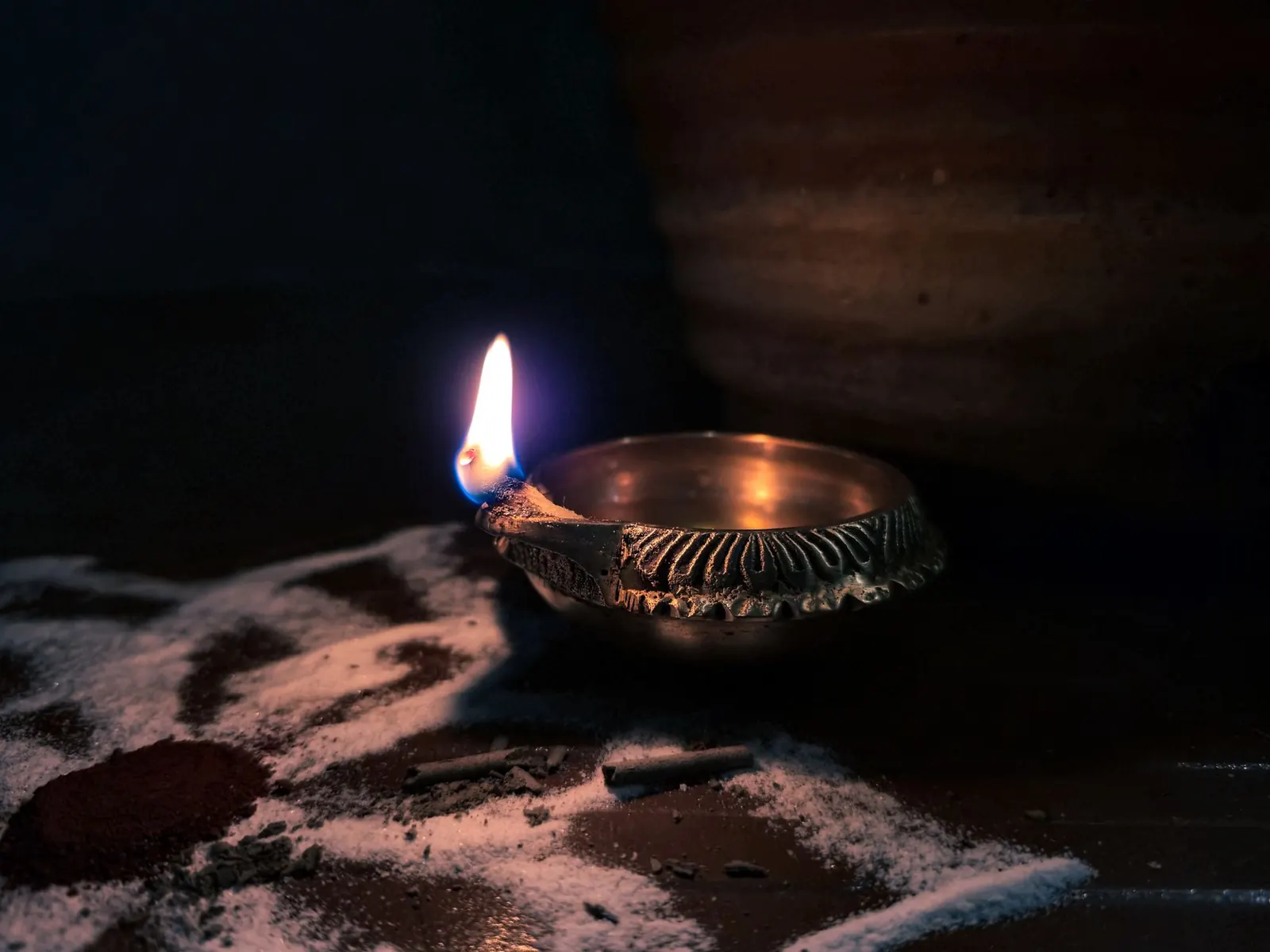
- Saturday practices. Lighting a sesame-oil lamp on Saturday evening, or visiting a Hanuman or Shani temple, are among the most widely followed customs.
- Mantra. The Shani beej mantra is traditionally chanted on a mala of 108 beads, and many people recite the Hanuman Chalisa on Saturdays. Our mantra tool picks a mantra from your own chart, for example a Saturn mantra while Saturn is passing over your Moon sign.
- Service and charity. Saturn is traditionally linked with workers, elders and people who serve. Giving time or help to them is perhaps the oldest Saturn remedy, and the one with no downside.
- 7 Mukhi Rudraksha. It is traditionally associated with Saturn and Mahalakshmi; our 7 Mukhi Rudraksha guide covers who wears it and how.
- Steadiness itself. Many astrologers say the best Saturn remedy is to do Saturn's work: keep routines, pay dues on time, finish what you start.
If you want to talk through your own phase, Astroliya's AI astrologer can read your chart with you in Hindi or English.
Questions people ask
What is the meaning of Sade Sati in simple words?
Sade Sati means "seven and a half". It is the roughly seven-and-a-half-year period when Saturn transits the sign before your Moon sign, your Moon sign, and the sign after it. Vedic astrology traditionally reads it as a time of responsibility and slow, lasting growth.
Which phase of Sade Sati is the hardest?
Tradition usually names the second phase, when Saturn sits over the Moon sign, as the most demanding, because the Moon represents the mind. The third phase is generally treated as the lightest. How any phase is felt still depends on the whole chart and the dasha running.
How many times does Sade Sati come in a lifetime?
Saturn completes its circuit in about 29 and a half years, so most people go through Sade Sati two or three times. Each round is traditionally read in the context of the age and stage of life in which it falls.
Can I check Sade Sati without my birth time?
Often, yes. Sade Sati depends on the Moon sign, and the Moon stays in one sign for about two and a half days, so a date and place of birth usually settle it. If the Moon changed sign on your birth date, you will need the time to be sure.
Is it bad to marry or start a business during Sade Sati?
Tradition does not forbid either. Astrologers look at the whole chart, the dasha and, for a wedding, the matching and muhurat, rather than ruling out seven and a half years of life. Practical judgement should lead the decision.
From the Astroliya store
Pieces for this guide
Chosen from our own store to go with what you just read.


