

Vastu for Bedroom: Best Direction, Bed Placement and Sleeping Direction
The vastu books put the main bedroom in the south-west. Your builder may have put it somewhere else, and in a rented flat that is not yours to change. Start with what still is: the way your head points, where the bed stands and what you keep out of the room at night.
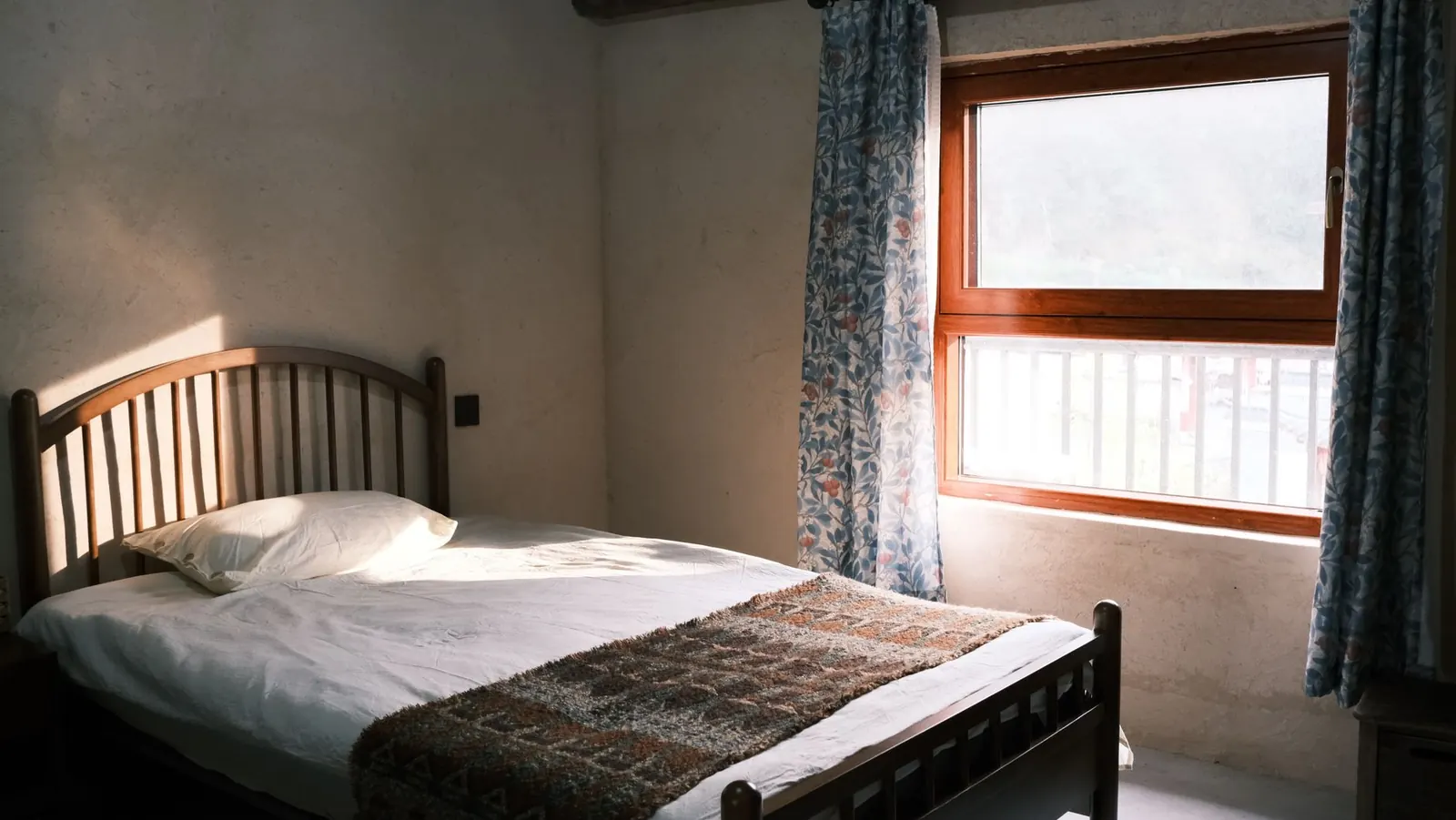
Most Indian flats were planned around shafts, balconies and building rules, not the compass, so the south-west corner that tradition reserves for the main bedroom often holds the living room or someone else's flat. Advice on vastu for bedroom layouts tends to skip that problem. It should not, because the tradition's bedroom guidance works on three levels: the zone of the house the room sits in, the way your head points when you lie down, and what shares the room with you at night. Only the first is set by the building. Vastu Shastra, the traditional Indian study of space and direction, has something to say about all three, and this guide takes them in turn, using the bedroom record in Astroliya's free vastu tool.
Keep one limit in mind throughout. Vastu is a tradition about arranging a home, not a sleep treatment. Weeks of poor sleep, heavy snoring or waking unrested are reasons to see a doctor, and nothing below asks you to knock down a wall.
The bedroom at a glance
Astroliya's vastu tool keeps the bedroom to four lines. They are reproduced exactly here, and they lean towards the things a household can change.
| What | Astroliya's bedroom record |
|---|---|
| Traditional zone | South-west, for the main bedroom |
| Lit on the compass | SW |
| Keep | Sleep with your head towards the south or east. Keep the room calm and uncluttered. Choose soft, warm colours for walls and linen. |
| Avoid | A mirror facing the bed. Storing clutter under the bed. A work desk or screen facing the bed. |
The rest of this article explains each line: why tradition says it, how strictly people follow it, and what to do when your home does not match. For the whole house on one plan, read Vastu Shastra for home.
Master bedroom vastu: why the south-west
Vastu divides a home into eight directions around a centre, and each direction carries a quality in the tradition. The south-west, called Nairitya, is read as the heaviest, most settled corner of the house: the place for weight, storage and stability. The north-east, its opposite, is kept light and open for prayer and fresh beginnings, which is why the puja corner goes there and the main bedroom does not.
Master bedroom vastu follows from that reading. The person or couple who head the household are traditionally given the south-west room, on the idea that the steadiest corner suits the people who carry the home's responsibilities. Other bedrooms are not held to the same rule. Classical guidance is mainly about the main bedroom; children's and guest rooms are commonly placed elsewhere, often towards the west or north-west, though practice varies between families and regions.
What this does not mean:
- A bedroom in the south-east or north-east is not "cursed" or dangerous. Tradition prefers the south-west; it does not predict harm from other corners.
- You do not need to swap rooms with your parents or children because of a compass reading. Many families arrange rooms around age, health, stairs and noise, which are good reasons in their own right.
- A flat whose bedrooms all sit on one side of the building is normal in Indian cities. The fixes later in this guide are for exactly that case.
Sleeping direction as per vastu: which way your head points
This is the rule people ask about most. The sleeping direction as per vastu is about where your head rests when you lie down, not which way your feet or your face point.
| Head towards | What tradition says | How it is usually read |
|---|---|---|
| South | Preferred | Steady, deep rest; the usual choice for the main bedroom |
| East | Preferred | Linked with the rising sun; often suggested for students and children |
| West | Acceptable in many households | Not the first choice, not avoided either |
| North | Traditionally avoided | The one direction most texts and families say to avoid for regular sleep |
Astroliya's bedroom record keeps it simple: head towards the south or east. That is the part classical and household traditions agree on most.
The reason tradition gives for avoiding north
Two explanations are commonly given. The first is customary: in many Hindu communities the head-to-north position is associated with how the body is laid after death, so it is avoided for ordinary sleep. The second is a modern one, often repeated: that sleeping with the head north sets the body against the earth's magnetic field. Treat that second explanation as a popular idea, not an established finding. It is the reasoning many people give, not something sleep research has shown.
So the honest summary is this. Head south or east is the traditional preference. If your room only allows head-west, that is generally considered acceptable. If it only allows head-north, the tradition would suggest turning the bed when you can, and nothing worse.
Bed direction as per vastu: where the bed goes
Bed direction as per vastu is the practical side of the same rule. Once you know which way your head should point, the bed placement follows.
- Headboard against a solid wall. Tradition and plain comfort agree here: a bed with a wall behind your head feels settled. Avoid a headboard under a window if another wall is available.
- Headboard on the south or east wall. That gives you head-south or head-east without thinking about it every night.
- Not directly under an overhead beam. This is a common vastu caution, and it also simply feels heavy to lie under one.
- Not in direct line with the door. Many vastu guides say your feet should not point straight out through the bedroom door while you sleep; placing the bed to one side of the doorway avoids it.
- Room to walk on both sides, for a double bed. A bed pushed into a corner leaves one person climbing over the other; many guides say both partners should be able to get in from their own side.
Mirror, clutter and screens: the three things to keep out
The avoid list in Astroliya's record is short and every item on it is something you can change in an afternoon.
- A mirror facing the bed. Tradition says a mirror should not reflect you while you sleep. If a wardrobe mirror faces the bed, a curtain or a cloth over it at night does the job; you do not need to remove the wardrobe.
- Storing clutter under the bed. Box beds are useful in small flats, so use them for clean, folded linen and seasonal clothes rather than broken items, old papers or things you have not opened in years.
- A work desk or screen facing the bed. A laptop desk or a television across from the bed keeps work and screens in view as you fall asleep. If the desk has to be in the bedroom, turn it to face a wall or cover the screen at night. The study room vastu guide covers which way the desk itself should face.
Bedroom colours
The record says soft, warm colours for the walls and linen. In practice people choose light creams, pale pinks, peach or light earth tones. Very dark walls and loud, high-contrast prints are usually kept for other rooms. There is no single "correct" colour, and you do not need to repaint a rented flat: bed linen, a curtain or a rug can carry the colour instead.
Vastu for bedroom in a rented flat: when nothing can move
Most people reading a vastu for bedroom guide cannot choose which corner of the flat the bedroom sits in. The good news is that almost every rule above is about what is inside the room, and that you can change.
Worked example: one bedroom, four walls, four choices
The room below is made up to show the method; it is not a reading of anyone's home. The main bedroom of a rented 2BHK sits in the north-west. The bed stands against the long north wall, so the couple sleep head-north. The door is in the south wall, a window takes up most of the west wall, a wardrobe with a mirrored shutter reflects the bed, and a study table with a monitor faces the bed from its foot.
Instead of fixing things one by one, try every wall as the headboard wall and check each against the record:
| Headboard on | Head points | What the record says | The catch in this room |
|---|---|---|---|
| North wall (as now) | North | Traditionally avoided | None physically; it is the longest wall, which is why the bed ended up there |
| East wall | East | Preferred | The bed runs across the shorter side, and the study table has to move off that wall |
| South wall | South | Preferred | The door is in this wall, so the bed would crowd the doorway |
| West wall | West | Acceptable | The headboard would sit under the window, which the placement list above says to avoid when another wall is free |
The east wall wins: a preferred direction, a solid wall behind the head, and a cost of one moved table. That one move settles most of the rest. The table goes beside the door, turned to face the wall so the monitor is no longer in view from the pillow. The mirrored shutter still catches the bed, so it gets a curtain on a tension rod, drawn at night. After that come the small jobs: anything broken comes out of the box storage, and a dark bedsheet gives way to a warm one.
Notice what the table did not include: the room's own zone. It stays in the north-west for as long as the family rents the flat. That line of the tradition belongs to the building; every line in the table belongs to the furniture, and the furniture is the part a tenant controls.
If the bed truly cannot turn
Some rooms only fit a bed one way. In that case:
- Keep the head off the north if any other direction fits, even diagonally.
- Make the remaining rules count: a calm, uncluttered room, no mirror facing you, no screen at the foot of the bed.
- Do not lose sleep over the direction itself. Tradition offers it as a preference, and a rested, tidy room matters more than a perfect compass.
How to find your directions
You need to know where south and east actually are before any of this helps.
- Stand near the centre of the room with your phone's compass app, away from steel almirahs, the fridge on the other side of a wall and other large metal objects that can throw the reading off.
- Hold the phone flat and note which wall faces south and which faces east.
- Take a second reading from another spot. If they disagree, move further from metal and try again.
- Open Astroliya's vastu tool, pick Bedroom and match the lit direction to your room.
The same method works for the rest of the home: the kitchen (vastu for kitchen) and the entrance (main door vastu) each have their own zone in the tool.
What vastu can and can't do for your sleep
Vastu offers a way to arrange a bedroom that many families find calming and orderly, and some of its rules overlap with plain good sense: a tidy room, a solid wall behind the bed, screens out of sight at night. That overlap is real.
What it cannot do is treat insomnia, stress, sleep apnoea or any medical condition, and it cannot promise harmony in a marriage or better health because a bed was turned. Read it as tradition and as a way to give your room some care, not as a fix for problems that need a doctor, a counsellor or an honest conversation.
You do not need to buy anything to follow this guide. Astroliya's vastu decor (two pyrite frames and a Lakshmi Yantra pyramid) is described for living rooms, offices, study rooms and puja spaces rather than the bedroom, and it is optional everywhere. If you want to talk through your own rooms, you can ask Astroliya's AI astrologer in Hindi or English; for anything structural, a qualified architect or engineer is the right person.
Bedroom vastu questions
Which direction should my head be when I sleep, as per vastu?
Tradition prefers the head towards the south or east, and that is what Astroliya's bedroom record says. West is generally treated as acceptable. North is the direction most households and texts say to avoid for regular sleep.
Can I sleep with my head to the west?
In most traditions, yes. West is not the first choice but it is not one of the avoided directions either. If you can turn the bed to south or east without much trouble, many people do; if you cannot, head-west is usually considered fine.
Is a mirror in the bedroom bad as per vastu?
The concern is a mirror that faces the bed and reflects you while you sleep. A mirror on a side wall that does not face the bed is usually not treated as a problem. If a wardrobe mirror faces the bed, covering it at night is the common, simple answer.
My bedroom is in the north-east. Do I need to move?
No. Tradition prefers the south-west for the main bedroom and the north-east for prayer, but it does not predict harm from a bedroom elsewhere. Follow the rules inside the room: head south or east, no mirror facing the bed, a calm, uncluttered space. Moving rooms is a family decision, not something a compass requires.
Does vastu for bedroom apply to a rented flat?
Yes, and mostly in the parts you control. You cannot move the room, but you can turn the bed, cover a mirror, clear under-bed storage and change the linen, which covers most of what the tradition asks of a bedroom.
From the Astroliya store
Pieces for this guide
Chosen from our own store to go with what you just read.
 45% off7 Horses Raw Pyrite Vastu Frame for Wealth, Success & Career Growth₹549
was ₹999Buy 10% offLakshmi Yantra Pyramid with Free Raw Pyrite Stone for Wealth & Prosperity₹899
was ₹999Buy 53% offASTROLIYA 7 Trunk Elephant Pyrite Wall Frame for Wealth & Prosperity₹699
was ₹1,499Buy Authentic 5 Mukhi Rudraksha Mala - 108 Beads for Meditation₹1,260.60Buy