

Main Door Vastu: Best Direction for Your Entrance, and What If It Faces South
In most city flats the builder chose the front door, and it opens wherever the corridor or the lift landing happened to be. Classical vastu still names a preferred direction, north, north-east or east, but it also reads where the door sits along its wall and puts most of its entrance advice into light, repair and a clear path, which any tenant can manage.
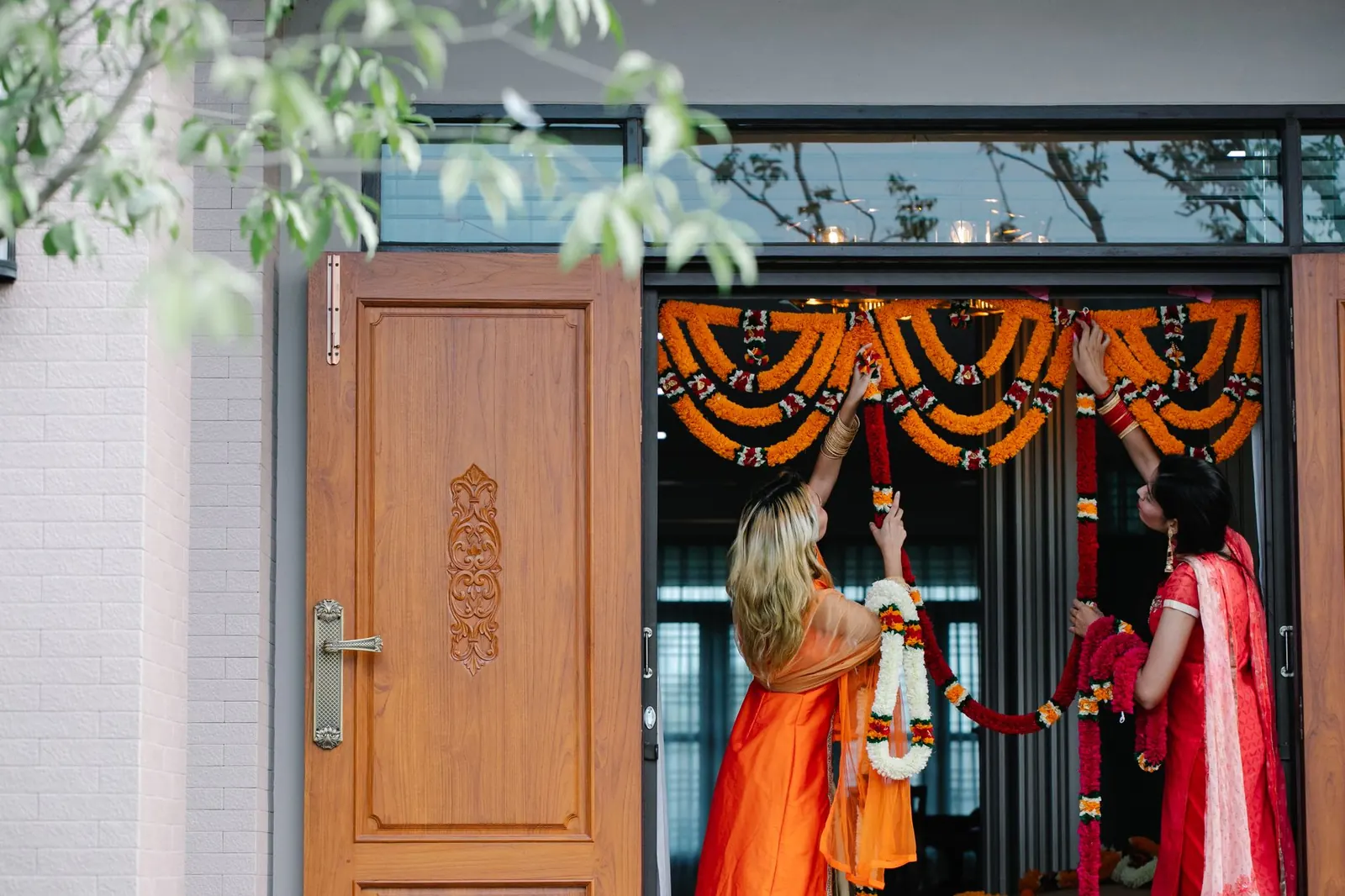
Ask a family in an apartment block which way their front door faces and the honest answer is often "whichever way the corridor ran". The stairs and the lift fix where every entrance on a landing goes, and four flats sharing one corridor cannot all open to the north-east. That is the situation main door vastu advice meets most often, and it is why this guide spends as much time on the door you already have as on the direction the classical texts prefer.
The tradition treats the entrance as the mouth of the house: the place where people, light, air and, in its own language, energy come in. It does name preferred directions, set out below, and that is where the worry starts, especially for families whose door faces south. But it also reads where a door sits along its wall, and it gives most of its entrance advice to things you can do without touching a wall.
All of this is offered as tradition, not as a rule of nature. Vastu is a way of arranging a home that many Indian families find meaningful; it does not decide your health, money or relationships, and nothing here replaces a structural engineer, a doctor or a financial adviser.
What Astroliya's entrance record says
Astroliya's free Vastu guide keeps one short record for each room, and the app shows the same record. For the entrance it reads:
| Entrance | What the record says |
|---|---|
| Traditionally preferred zone | North, North-east or East |
| Keep | The entrance well lit and free of clutter |
| Keep | The door in good repair: no creaks or loose handles |
| Keep | A clean doormat and a clear nameplate, which are seen as welcoming |
| Avoid | Piling shoes right at the door |
| Avoid | A dustbin beside the main door |
| Avoid | Anything that stops the door opening fully |
Notice what is not on that list: nothing asks you to move the door. One line names a direction; the other six are about care. That balance is deliberate, and it reflects how most practitioners actually advise people who already live somewhere.
Main door direction as per vastu: the traditional preference
The usual answer to "which direction is best for the main door" is north, north-east or east. The reasoning given in the tradition is simple enough to follow:
- East receives the morning sun, and the sun is the giver of light and health in Vedic symbolism.
- North is associated with Kubera, the guardian of wealth, and with steady, cool light through the day.
- North-east is the Ishan corner, considered the most sacred and lightest part of the plot. It is also why the pooja room is traditionally placed there.
West-facing doors are generally read as acceptable, and many vastu writers treat them as neutral rather than weak. South-facing doors are the ones people ask about most, and they have a section of their own below.
One honest point before going further: "facing" means the direction you look towards when you stand inside the house and look out through the open door. Many people measure it the other way round. Stand in the doorway, look outward, and read a phone compass away from steel grilles and electrical boards, which can throw the needle off.
Why the position along the wall can matter more than the facing
This is the idea most quick guides skip, and it changes the whole picture. In the Vastu Purusha Mandala, the grid that classical texts lay over a plot, the 81-square version most often used for homes divides its outer ring among 32 deities, eight along each side. Practitioners traditionally read a door by which of these segments, or padas, it opens through, not only by which side of the house it is on.
In practice that means:
- Divide the wall that carries the door into equal parts. Many practitioners use eight or nine.
- Note which part the centre of the door falls in.
- Read that part, rather than the wall as a whole, as the door's position.
The consequence is that every side, south included, has segments the tradition treats as favourable and segments it treats as less suitable. A north-facing door pushed into a less favoured corner segment can be read less kindly than a south-facing door placed well along its wall. Different schools name and rank the padas slightly differently, which is one more reason not to panic over a single label.
If you want to apply this to your own plan, a printed floor plan, a ruler and a compass reading are enough to see where your door sits. The interpretation of individual padas is where schools differ, so treat any one verdict as a view rather than a fact.
Is a south facing house bad in vastu?
No, not in the tradition as a whole. South facing house vastu is a large topic precisely because so many homes in Indian cities face south, and classical texts give south-facing doors positions of their own along the wall. The fear usually comes from a simplification: south is linked to Yama, the lord of dharma and of death, and that one association gets repeated until it sounds like a verdict.
What tradition actually suggests for a south-facing home is mostly about how the entrance is kept:
- Light it well. A bright light at the door, switched on in the evening, is one of the most common suggestions for any entrance and especially a south one.
- Keep the threshold clean and defined. A clean doormat and a clear threshold mark where outside ends and the home begins.
- Put up a clear nameplate. The entrance record already counts it as welcoming; for a south door it is often the first thing practitioners mention.
- Clear the path. Shoes, bins and parcels piled at the door are on the avoid list for every direction.
- Keep the door sound. A door that sticks, creaks or will not open fully is read as obstruction, whatever way it faces.
What a south-facing door does not mean: it does not mean illness, debt, quarrels or bad luck are coming. It does not mean you must sell, rebuild or buy anything. Families have lived well in south-facing homes for generations, and many practitioners openly say the placement along the wall and the care of the entrance outweigh the compass direction.
Keeping the entrance clear and lit
Most entrance advice is about the first few steps inside and outside the door. These are the habits that come up across schools, and none of them needs a contractor:
| Area | Traditionally suggested | Traditionally avoided |
|---|---|---|
| Outside the door | Good light, a clean doormat, a nameplate | A dustbin beside the door, broken pots or dead plants |
| The door itself | Opens fully and smoothly, sound hinges and handle | Creaks, loose handles, cracked panels left unrepaired |
| Just inside | A clear path into the house | A shoe pile right at the door, boxes behind the door |
| Line of sight | A pleasant view as you enter | A stove directly in line with the main door |
That last row comes from Astroliya's kitchen record rather than the entrance record: a stove directly in line with the main door is on the kitchen's avoid list. If your layout puts it there, a curtain, a low partition or simply keeping the kitchen door closed is the usual non-structural step. The kitchen guide covers the rest of that room.
Shoes are the question everyone asks. The record says not to pile shoes right at the door. A closed shoe rack placed to one side of the entrance, rather than in front of it, is the common compromise, and many practitioners prefer it on the south or west side of the entrance area rather than the north-east.
Where the elephant and horses frames traditionally go
Decor at the entrance is optional. Nothing in the entrance record asks for it, and a well-lit, uncluttered door does more in the tradition's own terms than any object. Still, two pieces come up often.
The elephant. Elephants are traditionally associated with strength, stability and prosperity, and a pair or a single elephant is often placed near the entrance or in the living room. Many practitioners suggest it face into the home rather than out of it, though schools differ on this. Astroliya's 7 Trunk Elephant Pyrite Wall Frame is a 19 x 19 cm wooden frame with raw pyrite stones, and its own description names the entrance area as one of the places it suits. Hang it inside, at eye level, where it is seen as you come in, not behind the door where it will be knocked.
The seven horses. Running horses are traditionally linked to progress and forward movement, which is why they are usually suggested for the living room, office or study rather than the doorway itself. The horses should look as though they are running into the room, not out of the door. Directions for the horses differ between schools, so we have kept them in a guide of their own: 7 horses pyrite frame and vastu direction.
Both pieces, and other traditional decor, are in the spiritual and vastu decor collection. Choose them because you like them in your home. They are symbols in a tradition, not a mechanism for wealth.
How to read your own main door in five steps
- Find the facing. Stand in the doorway, look out, and take a compass reading away from metal.
- Find the position. On a floor plan, divide the door's wall into equal parts and note where the door's centre falls.
- Check the six lines. Go through the entrance record above: light, repair, doormat and nameplate, shoes, bin, clearance.
- Check the line of sight. Stand at the door and see what you face first. Move a stove view, a bin or a clutter corner out of that line if you can.
- Stop there unless you are building. If you are planning a new house, a qualified architect can weigh vastu preferences alongside light, ventilation, structure and local rules. For a home you already live in, the first four steps are what practitioners usually advise.
Main door vastu in a flat: one entrance, walked through
This is an illustration, not a real home or a real reading. Take a third-floor flat whose door opens off a shared corridor, beside the lift.
On the landing. Standing in the doorway and looking out, the compass reads south. The corridor is the only way in, so the facing is settled. Measured along the flat's south wall, the door sits towards its south-western end, which is the placement the section on padas described as the one practitioners are more likely to flag. The corridor belongs to the building society, so none of that can change. The corridor light is on a timer and goes off early in the evening, and the family's shoes and dustbin wait beside the door.
At the threshold. This is where the record's lines can all be met. A small light of the family's own goes up beside the door and stays on in the evening. A clean doormat goes down, a nameplate goes up, and the bin moves inside until collection time. The top hinge that creaked is oiled, and the latch that needed a shove is fixed.
One step inside. A shoe rack stood behind the door and stopped it opening fully, so it moves to the side wall, out of the path. From the doorway the first thing in view is the hob through the open kitchen door, which is on the kitchen record's avoid list; the kitchen door now stays closed, or a curtain hangs across it.
What stays as it was. The door, its frame and the wall. Nothing was bought and nothing was built. Every line of the entrance record is met except the direction, which was never the family's to choose, and that is the outcome many practitioners would call enough for a south entrance.
For the rest of the house, the room-by-room vastu plan puts every room's zone on one page, and the Vastu guide shows each record with its compass. If you want to talk through a specific layout, Astroliya's AI astrologer chat can go through the same entrance record with you; it is an AI and gives no structural advice.
Questions people ask
Which direction is best for the main door as per vastu?
Classical vastu traditionally prefers north, north-east or east, which is also the zone in Astroliya's entrance record. West is generally treated as acceptable. Practitioners also read where the door sits along its wall, so the direction alone is only half the answer.
Is a south-facing main door bad luck?
The tradition does not say so as a whole. South-facing doors have favoured and less favoured positions along the wall like every other side, and the usual suggestions are practical: good light, a clean threshold, a nameplate and a clear path. A south door is not a prediction of illness, loss or misfortune.
Can I keep a shoe rack near the main door?
The entrance record advises against piling shoes right at the door. A closed rack to one side of the entrance, not blocking the door or the path, is the usual compromise, and many practitioners prefer the south or west side of the entrance area for it.
Should I change my main door if it is in the wrong direction?
For a home you already live in, practitioners rarely suggest structural changes; the care of the entrance is where they start. Any change to doors or walls is a building decision for an architect or engineer, and vastu should be one consideration among several, not the deciding one.
Do vastu remedies at the entrance actually work?
Vastu is a tradition, and its remedies are traditionally recommended rather than proven. What is plainly true is that a well-lit, clean, uncluttered entrance is safer and more pleasant to come home to. Treat any remedy as optional, and never as a substitute for medical, legal or financial advice.
From the Astroliya store
Pieces for this guide
Chosen from our own store to go with what you just read.
 45% off7 Horses Raw Pyrite Vastu Frame for Wealth, Success & Career Growth₹549
was ₹999Buy 10% offLakshmi Yantra Pyramid with Free Raw Pyrite Stone for Wealth & Prosperity₹899
was ₹999Buy 53% offASTROLIYA 7 Trunk Elephant Pyrite Wall Frame for Wealth & Prosperity₹699
was ₹1,499Buy Authentic 5 Mukhi Rudraksha Mala - 108 Beads for Meditation₹1,260.60Buy