

How Many Gunas Should Match for Marriage? What 18, 24 or 28 Out of 36 Means
Two people whose Moons both sit in Rohini usually score 28 out of 36, a very good match on paper, and still carry Nadi dosha, because a shared birth star always means a shared Nadi. The 18-point threshold is where the reading starts, not where it ends.
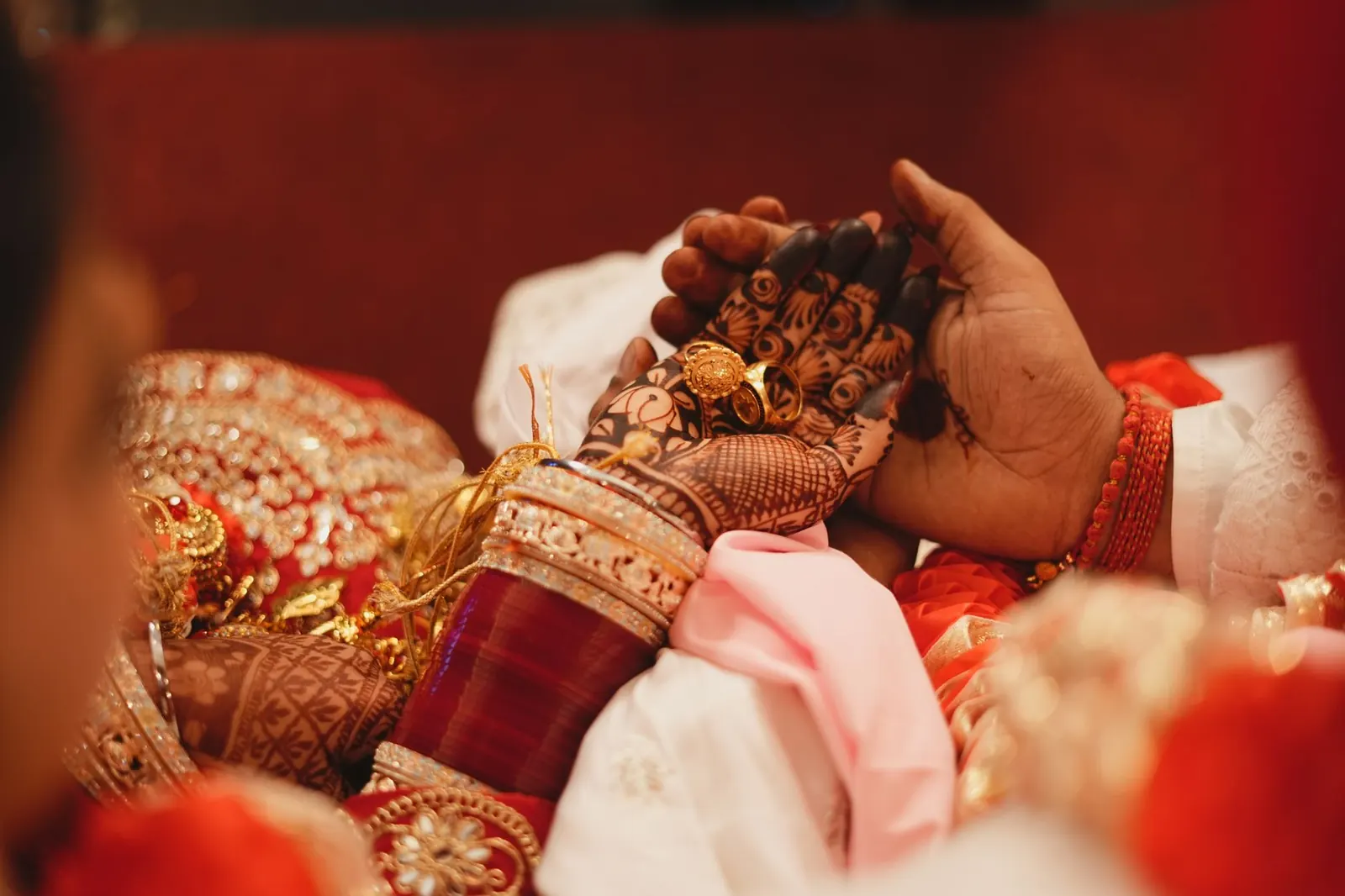
If you are asking how many gunas should match for marriage, the traditional answer is 18 out of 36. In Ashtakoota matching, the Guna Milan method most Indian families use, a total of 18 or more is read as favourable and anything below it as a match that deserves a closer look. That number is real and widely followed, but it is only the start of the reading. A total is a sum of eight separate scores, and classical texts treat two of them, Nadi and Bhakoot, as important enough to be read on their own whatever the total says.
Astroliya's free kundli matching tool shows all eight koota scores beside the total for exactly that reason, and the bands below use its own labels.
How many gunas should match for marriage: the 18-point threshold
Guna Milan compares the two people's Moon positions at birth across eight kootas, each with a fixed maximum. Add the maxima and you get 36:
| Koota | Max points | Read from |
|---|---|---|
| Varna | 1 | Moon sign |
| Vashya | 2 | Moon sign |
| Tara | 3 | Birth nakshatra |
| Yoni | 4 | Birth nakshatra |
| Graha Maitri | 5 | Moon sign |
| Gana | 6 | Birth nakshatra |
| Bhakoot | 7 | Moon sign |
| Nadi | 8 | Birth nakshatra |
The tradition sets the minimum guna for marriage at half the maximum: 18. On Astroliya, a total under 18 is labelled Needs a closer look, with the note that it is below the 18 gunas traditionally seen as the threshold for a favourable match and that many astrologers look at both full charts before reading much into it. Notice what that label does not say. It does not say the match is bad, and it does not say the marriage should not happen. It says the score alone is not enough to go on.
If you want the method behind each koota, Guna Milan explained walks through all eight. This article is about the number.
Guna milan score bands at a glance
Scores move in half points, because Tara, Vashya and Graha Maitri can award halves. These are the four bands the matching tool uses:
| Total out of 36 | Label on Astroliya | What it traditionally means |
|---|---|---|
| Under 18 | Needs a closer look | Below the traditional threshold; read the full charts before concluding anything |
| 18 to 24.5 | Good match | At or above the threshold |
| 25 to 32.5 | Very good match | Comfortably above it |
| 33 to 36 | Excellent match | Close to the maximum on Moon factors |
Other websites and family astrologers name these bands differently. Some call 18 to 24 "average"; some draw an extra line at 28. The names are conventions, not rules. The one number almost everyone agrees on is 18, which is why the tool uses it as the dividing line and keeps the other bands descriptive.
Is an 18 guna match good or bad?
An 18 sits exactly on the threshold, and the tool says so plainly: "At the 18 gunas traditionally seen as the threshold for a favourable match." So the honest answer to whether an 18 guna match is good or bad is neither. It passes the traditional bar, and what matters next is how the 18 is made.
Two very different 18s are possible, and the arithmetic shows why.
- An 18 that includes Nadi and Bhakoot in full. Those two kootas alone give 15 points. That leaves just 3 points from the other six kootas, so Varna, Vashya, Tara, Yoni, Graha Maitri and Gana are mostly at zero. The two heaviest factors are clear, but temperament (Gana), physical compatibility (Yoni) and the friendship of the sign lords (Graha Maitri) are all weak.
- An 18 with Nadi and Bhakoot both at zero. The other six kootas can give at most 21 points, so an 18 here means they are nearly full. Temperament and friendship look good, but the two kootas classical texts weigh most heavily are both flagged.
Same total, opposite profile. An astrologer would read these two couples in completely different ways, which is the whole point of looking past the number.
Why the total alone can mislead
The examples below are illustrations, not real couples. Each one was worked through the same Ashtakoota tables that Astroliya's matching engine uses, and several of them are fixed cases in the engine's own tests. The bride is listed first, because three kootas read differently depending on who is the bride and who is the groom.
| Illustration | Total | Nadi (of 8) | Bhakoot (of 7) | Band |
|---|---|---|---|---|
| Both Moons in Rohini, Taurus | 28 | 0 | 7 | Very good match |
| Bride Ashwini, Aries; groom Rohini, Taurus | 23.5 | 8 | 0 | Good match |
| Bride Chitra, Libra; groom Chitra, Virgo | 21 | 0 | 0 | Good match |
| Bride Purva Ashadha, late Sagittarius; groom Bharani, Aries | 20 | 0 | 0 | Good match |
| Bride Uttara Phalguni, Leo; groom Chitra, Libra | 16.5 | 8 | 7 | Needs a closer look |
| Bride Magha, Leo; groom Revati, Pisces | 13 | 0 | 0 | Needs a closer look |
Read the rows one at a time and the pattern is clear.
A high total with the heaviest koota at zero
In the first row both Moons are in Rohini in Taurus, and every koota except one scores full marks: 1 + 2 + 3 + 4 + 5 + 6 + 7 = 28. The one that scores zero is Nadi, worth 8, because a shared birth star always means a shared Nadi. Most same-star pairs land on this 28; the exceptions are stars that straddle a sign, or the mid-point of Sagittarius or Capricorn where the Vashya group changes. A 28 lands in the "Very good match" band, yet tradition would still discuss Nadi dosha for this pair. The Nadi dosha guide explains what it is traditionally linked to and the conditions under which it is considered cancelled.
Above 18 with both Nadi and Bhakoot at zero
The Chitra pair scores 21 even though Nadi and Bhakoot both give nothing, because the other six kootas are all full. Many astrologers would treat this Nadi dosha as cancelled, since the two share a birth star but not a Moon sign, a classical exception. Their Bhakoot zero comes from a 2/12 pairing, and the sign lords, Venus and Mercury, are friends, which tradition says softens it. The Purva Ashadha and Bharani pair scores 20 with the same two zeros (a 5/9 pairing this time), and here no Nadi exception applies, though Jupiter and Mars, the two sign lords, are friends, so Bhakoot is again read as softened. Both clear the threshold comfortably. Neither would be read on the total alone.
A low total with both heavy kootas clear
Now the reverse. The Uttara Phalguni and Chitra pair has full marks on Nadi and Bhakoot, the two factors families most often worry about, and still totals only 16.5 because Yoni, Gana, Graha Maitri, Vashya and Varna are at or near zero. It falls under 18, yet it carries no Nadi or Bhakoot dosha at all.
The data behind the pattern
These are not rare edge cases. The matching engine is checked against a fixed set of 150 generated test pairs (computer-generated birth details, not real couples). Of those, 96 score 18 or more. Of those 96, 56 still have Nadi or Bhakoot at zero. In other words, more than half of the passing scores in that set carry at least one of the two flags the total cannot show.
The three heaviest kootas: Nadi, Bhakoot and Gana
Three kootas carry 21 of the 36 points between them, and traditional readings give them extra attention.
- Nadi (8 points) compares the Nadi of the two birth stars: Adi, Madhya or Antya. Same Nadi scores 0. It is traditionally linked to wellbeing and family continuity, and classical texts list several cancellations, the most common being a shared birth star with different Moon signs, or a shared Moon sign with different birth stars.
- Bhakoot (7 points) looks at how far apart the two Moon signs are. Pairs at 2/12, 5/9 or 6/8 score 0. It is traditionally linked to family life and shared growth, and it is often considered softened when the two sign lords are friends or the same planet. The Bhakoot dosha guide goes through each pair.
- Gana (6 points) compares temperament: Deva (gentle), Manushya (balanced) and Rakshasa (intense). It reads differently by side, so a Rakshasa bride with a Deva groom does not score the same as the reverse.
A zero in any of these is a reason to look closer, not a verdict. If you want to understand which part of the score comes from your Moon signs and which from your birth stars, rashi compatibility for marriage splits the 36 points that way.
Low score? What astrologers traditionally look at next
When a total falls under 18, or a heavy koota is at zero, the traditional next step is not to stop but to widen the view. Astrologers usually read:
- Both full birth charts, not just the two Moons. Guna Milan uses one point from each chart; a kundli has twelve houses and nine grahas.
- The 7th house and its lord in each chart, the house classical texts associate with partnership and marriage.
- Mangal dosha in both charts, which Guna Milan does not score at all. Our guide to Manglik and non-Manglik marriage explains how it is checked alongside the score.
- The cancellation rules for any koota at zero, especially Nadi and Bhakoot.
- The dasha periods running for each person, which astrologers use to read timing rather than compatibility.
The marriage compatibility report reads the 7th house and its lord, Venus, Manglik status and the periods linked with partnership in a full chart. And if you want to ask follow-up questions about your own result, Astroliya's AI astrologer can explain each koota in Hindi or English. It is an AI, and it reads the tradition for you; it does not decide for your family.
Is 36 out of 36 a perfect match?
A full 36 means every koota is at its maximum. It is uncommon, and it is pleasant to see, but it describes the two Moon positions and nothing else. Guna Milan compares Moon positions only. It does not look at how two people talk to each other, what they want from life, how they handle money or disagreement, or what their families are like. The matching tool closes every result with the same line for a reason: shared values and how you talk to each other matter more than any score.
The same is true at the other end. A score of 13 is not a prediction of an unhappy marriage. It is one traditional input, best treated as the start of a family conversation rather than the end of one.
Questions people ask
Does swapping the bride and groom change the score?
Yes, sometimes. Varna, Vashya and Gana read differently depending on who is the bride. In one of the engine's test cases, a Magha (Leo) bride with a Revati (Pisces) groom scores 13, while the same two Moons with the roles reversed score 11. On the matching tool, enter the bride on the Girl side and the groom on the Boy side.
What if one of us doesn't know the birth time?
The tool can still give a score, but it is marked approximate, because the Moon's position has to be estimated and it moves roughly a nakshatra a day. Tara, Yoni, Gana and Nadi depend on the exact birth star, so they are the kootas most likely to change once the time is known. Treat an approximate score as a rough guide.
Is 18 the minimum guna for marriage everywhere?
Eighteen is the threshold most commonly used with the Ashtakoota method, and it is the line Astroliya's tool uses. Some families and regional traditions use other matching systems or weigh particular kootas more heavily. Guna Milan is a custom families choose to follow, not a legal requirement for marriage.
Can a couple with fewer than 18 gunas marry?
Of course. Many couples do, and the tradition itself expects astrologers to read both full charts and the cancellation rules before drawing any conclusion. A low score tells you where to look, not what will happen.
Is a 28 better than a 24?
On the total, yes, but the total is not the whole story. A 28 made with Nadi at zero and a 24 with Nadi and Bhakoot both full would be read very differently. Look at the eight koota scores, not just their sum.
From the Astroliya store
Pieces for this guide
Chosen from our own store to go with what you just read.


