

Manglik and Non-Manglik Marriage: What Kundli Matching Actually Checks
Can a Manglik marry a non-Manglik? Classical texts never made Mars in a sensitive house a bar on its own: they list conditions that cancel or soften it, and ask the astrologer to read both full charts before saying anything about the marriage.
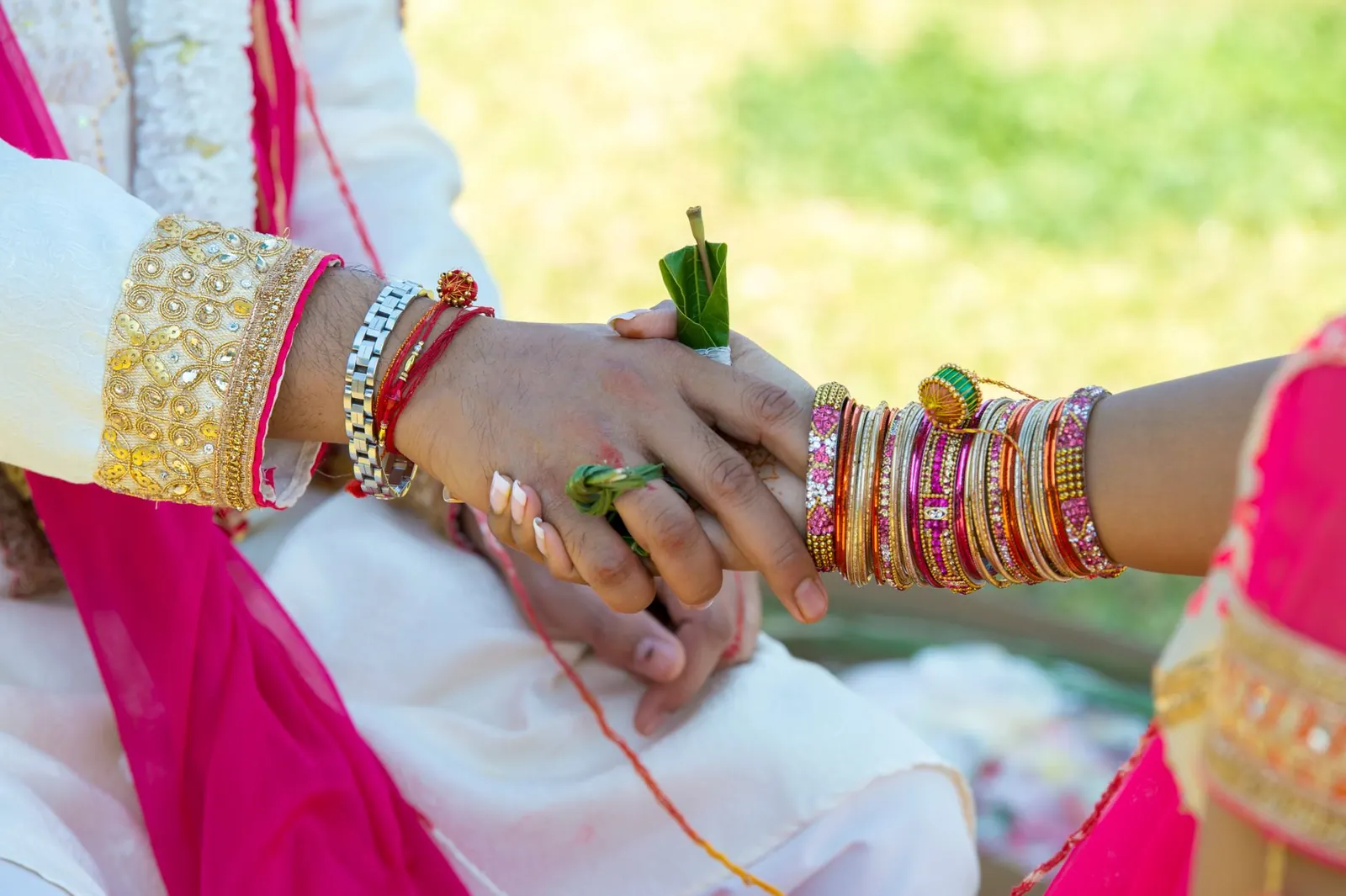
The question usually arrives in a family conversation, not a textbook: the proposal looks right, and then someone says the girl is Manglik and the boy isn't, or the other way round. A Manglik and non-Manglik marriage is one of the most common worries in kundli matching, and it is often answered with a flat yes or no. In the Parashari tradition it was never a one-line answer. Astrologers traditionally read a one-Manglik pair alongside both full charts, not on its own.
Astroliya's kundli matching can show one of four results, set out below, and none of them is a ruling on the marriage. What Manglik dosha is, and the full list of classical cancellations, are in our Manglik dosha explainer.
The short answer
Can a Manglik marry a non-Manglik? In the tradition, yes. Classical texts describe Manglik as a factor to be weighed in matching, and they list many conditions under which it is treated as cancelled or softened. Manglik status alone was never a bar to marriage.
What astrologers traditionally do with a one-Manglik pair is look further, not stop. They read where Mars sits by sign, what aspects it, the 7th house and its lord in both charts, and the guna score from the eight kootas. Only then do they form a view, and even then it is a view about temperament and adjustment, not a prediction of how the marriage will turn out.
How Astroliya decides who is Manglik
Every screen on Astroliya uses the same rule, so you are never Manglik on one page and not on another.
- The rule: Mars in the 1st, 2nd, 4th, 7th, 8th or 12th house, counted from the lagna (ascendant).
- Houses are whole signs: each sign is one house, counted forward from the lagna sign.
- It needs the birth time: the lagna changes roughly every two hours, so without a time there is no lagna and no house to count.
- No cancellations are folded in: "Manglik" here means only that Mars is in one of those six houses. Cancellations belong to the reading, not to the label.
Many North Indian astrologers use a five-house list: 1, 4, 7, 8 and 12, leaving out the 2nd. Some also count from the Moon sign or Venus. These are real variations in the tradition, and they explain most cases where two calculators disagree about the same person. If you want to work out your own status by hand, Am I Manglik? walks through the count in five steps.
Manglik and non-Manglik marriage: the four results matching can show
When you match two charts on /matching, the Manglik check runs for both people and the result carries one of four notes. These are the exact notes the matching engine prints.
| Your case | What the result says | How tradition reads it |
|---|---|---|
| Both Manglik | "Both of you are Manglik, which tradition reads as balancing it." | The most widely accepted cancellation: the two are read as balancing each other |
| Neither Manglik | "Neither of you is Manglik." | The question doesn't arise; the rest of the match is read as usual |
| Only one Manglik | "Only one of you is Manglik. Many astrologers weigh this alongside the full charts — for example Mars's sign and aspects — rather than on its own." | A point to look into further, flagged as a mismatch, not a rejection |
| A birth time missing | "Manglik needs the birth time to place Mars in a house, so it couldn't be checked for" the person concerned | Unknown. Not Manglik, and not non-Manglik either |
The fourth row matters more than people expect. Some calculators quietly assume a default time, or switch to counting from the Moon sign, and then give a confident answer. Astroliya doesn't guess: the person's status shows as "Needs birth time" and the note says the check couldn't be made. If a birth time is approximate, Kundli without birth time explains how to test whether the uncertainty changes the answer.
When only one partner is Manglik: what astrologers weigh
This is the case behind most searches for "manglik girl non manglik boy" or the reverse. The tradition does not treat the two genders differently in the rule itself: Mars in the same house is read the same way in a man's chart or a woman's. Popular retelling has often put more weight on the bride's chart, but that is custom, not the classical rule.
When only one chart is Manglik, these are the things astrologers traditionally look at next, roughly in this order.
- Mars's sign in the Manglik chart. Mars in its own signs (Aries, Scorpio) or exalted (Capricorn) is commonly read as cancelling the dosha even in a Manglik house. Some texts also tie exceptions to a specific house and sign pair.
- What aspects or joins Mars. Jupiter aspecting Mars, or Mars conjoined with Jupiter or the Moon, is often cited as softening it.
- The 7th house in both charts. A strong 7th lord, Venus well placed, or Jupiter in the 1st or 7th house is traditionally read as protective of marriage.
- The same houses in the other chart. A widely cited balancing rule looks at the non-Manglik partner's chart: if Saturn, Rahu or Ketu sits in one of those same houses there, many astrologers read the two charts as evenly matched, much as two Manglik charts are.
- The rest of the match. The guna score and its weak spots, such as nadi dosha or bhakoot dosha, are weighed alongside the Manglik point, not after it.
The full list of cancellation conditions, with a sign-by-house table, is in Manglik dosha: what it is and when it is cancelled. If you want it written out for your own chart, the Mangal Dosha report covers whether your chart is considered Manglik and why, Mars by house and sign, the traditional cancellation rules that may apply, and how it is read in marriage matching, with optional remedies kept to the end.
A worked example: why the 2nd house changes the answer
This is an illustration, not a real couple. It shows how one choice in the rule can flip a match from "mismatch" to "no issue".
| Lagna | Mars in | Mars's house | Six-house rule (Astroliya) | Five-house rule | |
|---|---|---|---|---|---|
| Bride (sample) | Pisces | Aries | 2nd | Manglik | Not Manglik |
| Groom (sample) | Gemini | Leo | 3rd | Not Manglik | Not Manglik |
Under the six-house rule Astroliya applies, the bride is Manglik and the groom is not, so /matching shows "Only one of you is Manglik" and flags it as a mismatch. Under the five-house list many North Indian astrologers use, neither is Manglik and the question doesn't come up.
Now read the bride's chart the traditional way. Her Mars is in Aries, its own sign. Many astrologers would treat that as a cancellation in any case. So two families could hear three different things about the same pair: "she is Manglik", "she isn't", and "she is, but it's cancelled". None of them is lying. They are answering slightly different questions, which is why the reasoning matters more than the label.
What to do with a result like this:
- Note which rule the person giving you the answer is using.
- Look at Mars's sign before reacting to the house.
- Read the Manglik note beside the guna score and the 7th house, not on its own.
Myths you will hear, and what tradition says
Fear travels faster than the classical texts. A few common claims the tradition does not support:
- "The marriage won't last." No single placement decides a marriage. Manglik describes where one planet sits; the tradition reads it as a matter of temperament, energy and adjustment, and lists many cancellations.
- "The non-Manglik partner will fall ill or die." This is the most frightening version, and it is fear, not a reading. No chart placement on its own predicts anyone's health or lifespan.
- "Manglik ends at 28." Mars's house in your birth chart does not change with age. Some astrologers say Mars's effects mature over time, but that is an interpretation, not part of the rule.
- "A Manglik must marry only a Manglik." Two Manglik charts are traditionally read as balancing each other, but that is one cancellation among many, not the only acceptable match.
- "It's worse for a girl." The rule is the same for both charts. Weighing the bride's chart more heavily is a social habit, not the classical method.
Kumbh vivah and other customs
Some families choose a ceremony before the wedding when one partner is Manglik and the dosha is read as not cancelled. The best known is Kumbh vivah, a symbolic marriage with a clay pot (kumbh) before the real wedding; related customs use an image of Vishnu or a peepal or banana tree instead. Others follow simpler practices: Tuesday prayers, the Hanuman Chalisa, or charity linked with Mars.
These are customs that families traditionally follow, and they are entirely optional. They are not a condition for a good marriage, and nothing here suggests that any ritual changes an outcome. If a ceremony brings a family peace of mind, that is the family's choice; if it causes pressure or expense, it is fine to set it aside. No ritual is a substitute for medical, legal or financial advice, and none replaces an honest conversation between two people.
How to approach the decision as a family
If the match is otherwise promising and one partner is Manglik, a calm sequence helps:
- Confirm both birth times. A wrong time can make someone Manglik who isn't, or hide it.
- Run both charts through /matching and read the Manglik note beside the guna score. How many gunas should match explains what the score bands mean.
- Check Mars's sign in the Manglik chart against the common cancellations.
- If questions remain, ask Astroliya's AI astrologer in chat to explain the Manglik note and the cancellations that might apply, or read the Mangal Dosha report for the full written detail.
- Then put the astrology down and talk about what actually holds a marriage together: values, families, money, children, and how the two of you handle disagreement.
Questions people ask
Can a Manglik marry a non-Manglik?
Yes. Tradition treats Manglik as one factor in matching, not a bar to marriage, and classical texts list many conditions under which it is treated as cancelled. When only one partner is Manglik, astrologers traditionally weigh Mars's sign and aspects and both full charts before forming a view.
Is a Manglik girl and non-Manglik boy match worse than the reverse?
Not under the classical rule. Mars in the same house is read the same way in either chart. The idea that a Manglik bride is a bigger concern comes from custom, not from how the check is defined.
Why does /matching say Manglik couldn't be checked?
Because one or both birth times are missing. The Manglik check counts Mars's house from the lagna, and the lagna needs the time of birth. Rather than guess, Astroliya shows "Needs birth time" for that person and leaves the question open.
Does a high guna score cancel Manglik dosha?
No. The guna score and the Manglik check measure different things: guna milan compares the two Moon positions across eight kootas, while Manglik looks at Mars's house in each chart. Astrologers read them together, and a strong score is one more factor on the positive side, not a cancellation.
Do we need to do Kumbh vivah?
No. Kumbh vivah is a custom some families choose when the dosha is read as not cancelled, and it is optional. Whether to do it is a family decision; the tradition itself lists many cancellations that make the question unnecessary for many couples.
From the Astroliya store
Pieces for this guide
Chosen from our own store to go with what you just read.


