

Nadi Dosha: Meaning, Traditional Cancellations and Remedies
Same Nadi, zero of eight: that is the whole arithmetic of Nadi dosha. Because Nadi is the heaviest koota in Guna Milan, that one all-or-nothing rule can move a match from above the traditional 18-guna threshold to just below it.
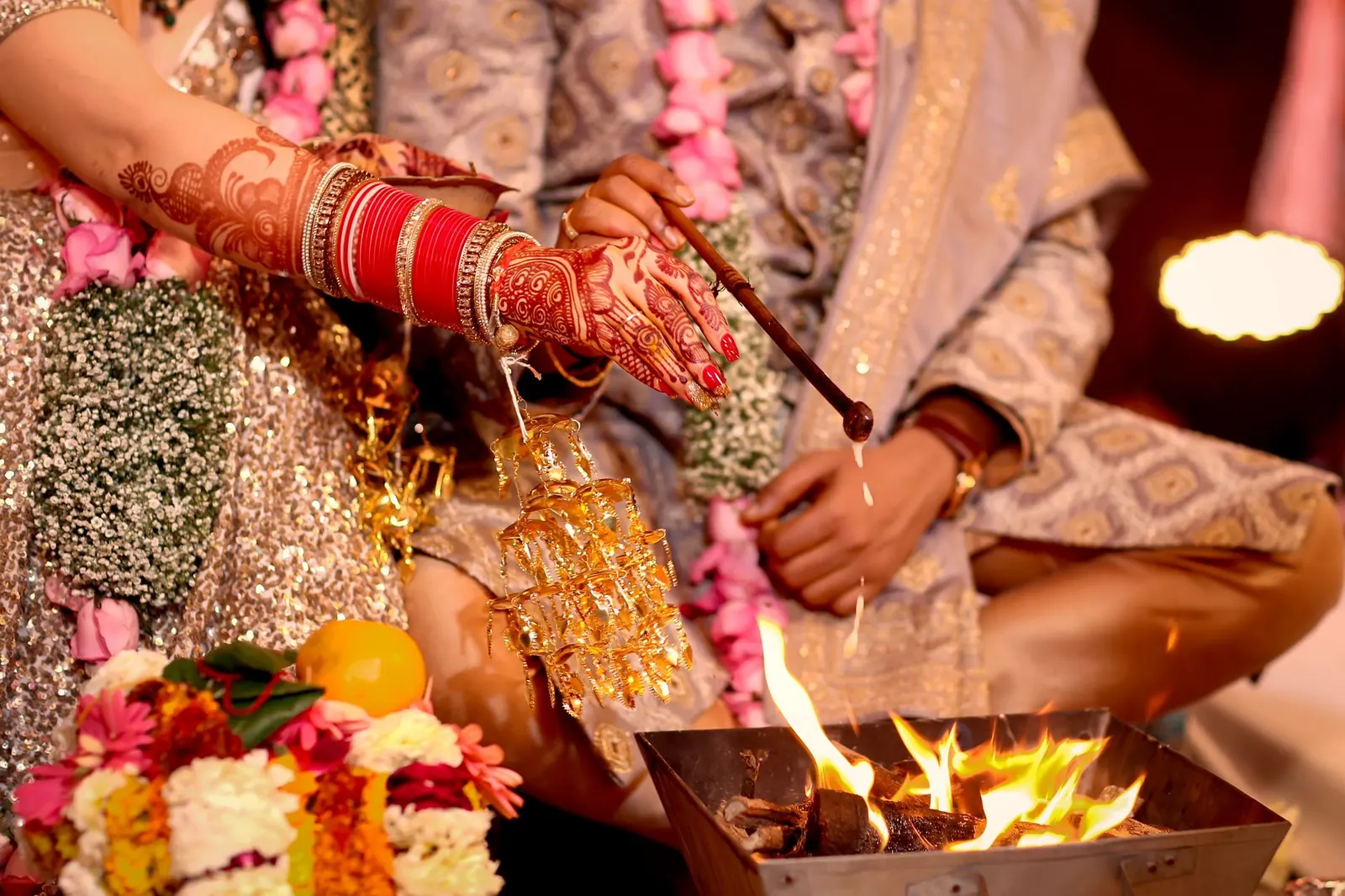
Nadi dosha is the result most likely to turn a calm kundli matching conversation into a worried one. In the Ashtakoota method of Guna Milan, Nadi is the last and heaviest of the eight kootas: it carries 8 of the 36 points. When both partners were born under nakshatras of the same Nadi, that koota scores 0, and astrologers traditionally call this Nadi dosha.
Nadi dosha is not a medical forecast about health or children. Tradition also names exceptions in which it is treated as cancelled, and Astroliya's free matching tool checks the two most widely accepted ones whenever partners share a Nadi.
What Nadi dosha is in kundli matching
Classical matching texts divide the 27 nakshatras into three Nadis: Adi (beginning), Madhya (middle) and Antya (end). Every person belongs to one Nadi, set by the nakshatra the Moon occupied at birth. The scoring rule is the simplest in Guna Milan:
- Different Nadis: Nadi scores the full 8 points.
- Same Nadi: Nadi scores 0 points. This is Nadi dosha.
There is no partial score. That all-or-nothing rule, together with the size of the koota, is why Nadi dosha draws so much attention. Losing 8 points can move a total from comfortably above the traditional threshold of 18 to just below it, which is covered in how many gunas should match.
Tradition links Nadi with wellbeing and family continuity, and astrologers commonly associate each Nadi with one of the three doshas of Ayurveda: Adi with Vata, Madhya with Pitta and Antya with Kapha. The traditional reasoning is that two people of the same constitution may not balance each other. It is worth reading that as the symbolic language of the tradition rather than as a statement about anyone's body.
Find your Nadi: all 27 nakshatras
The Nadis run in a fixed pattern through the nakshatras: Adi, Madhya, Antya, Antya, Madhya, Adi, then the same six again from Punarvasu, and so on round the zodiac. The table below follows that rule exactly as Astroliya's matching engine applies it, so it agrees with the result you see in the matching tool.
| Nadi | Nakshatras |
|---|---|
| Adi | Ashwini, Ardra, Punarvasu, Uttara Phalguni, Hasta, Jyeshtha, Mula, Shatabhisha, Purva Bhadrapada |
| Madhya | Bharani, Mrigashira, Pushya, Purva Phalguni, Chitra, Anuradha, Purva Ashadha, Dhanishta, Uttara Bhadrapada |
| Antya | Krittika, Rohini, Ashlesha, Magha, Swati, Vishakha, Uttara Ashadha, Shravana, Revati |
Each Nadi holds exactly nine nakshatras. If you do not know your birth nakshatra, a free kundli from your date, time and place of birth shows it. A nakshatra worked out from the first letter of a name is a different thing and should not be used for this check.
How common same-Nadi matches are
Because there are three Nadis of equal size, two people picked at random share a Nadi about one time in three. Put another way, roughly a third of all kundli matches show Nadi dosha before any exception is considered. That is a useful fact to hold on to. A condition this common cannot mean that a third of all marriages are headed for trouble, and the tradition itself never treated it that way: it surrounds the rule with exceptions and with the instruction to read both full charts.
When Nadi dosha is traditionally cancelled
Classical texts and later commentaries list several situations in which a same-Nadi match is not treated as a dosha. Astroliya's matching tool applies the two most widely accepted ones, and it words them the way they appear in your result:
| Situation | How /matching words it |
|---|---|
| Same birth star, different Moon signs | "You share a birth star but not a Moon sign, an exception many astrologers say cancels it." |
| Same Moon sign, different birth stars | "You share a Moon sign but not a birth star, an exception many astrologers say cancels it." |
| Same Nadi, neither of the above | "Both of you have [Adi, Madhya or Antya] Nadi; astrologers usually look at the full charts before reading much into it." |
Two points about how this shows up in practice. First, the Nadi score itself stays at 0 when an exception applies; the cancellation appears as a note beside it, because the 36-point total is a count and the exception is a reading of that count. Second, the first exception is possible because some nakshatras straddle two Moon signs. Krittika, for example, begins in Aries and ends in Taurus, so two people can share Krittika while one has an Aries Moon and the other a Taurus Moon.
Some commentaries go further. They treat a shared nakshatra in different padas (quarters) as a softening factor, or look at whether the Moon-sign lords of the two partners are the same or friendly. These are not applied automatically by the tool. They belong to a reading of both full charts, and different traditions weigh them differently, so treat them as points to explore rather than as a rule.
What if both the birth star and the Moon sign are the same?
Then neither exception applies. Astrologers often single out this case, same nakshatra and same rashi, as the one to look at most carefully. Even here, the traditional advice is to read the rest of both charts rather than to decide on one koota.
A worked example
This is an illustration, not a real couple. Priya has her Moon in Virgo in Uttara Phalguni; Rahul has his Moon in Scorpio in Jyeshtha.
- Look up the Nadis. Uttara Phalguni is Adi; Jyeshtha is also Adi. Same Nadi, so Nadi scores 0 of 8.
- Check the first exception. They do not share a birth star, so it does not apply.
- Check the second exception. Virgo and Scorpio are different Moon signs, so it does not apply either.
- Read the total. Across all eight kootas this pair scores 14 of 36. Nadi accounts for 8 of the points they did not get, and Gana for another 6. Bhakoot, interestingly, scores the full 7, so this pair has no Bhakoot dosha.
- Read the note. The tool marks the result "Needs a closer look" and says that both partners have Adi Nadi and that astrologers usually look at the full charts before reading much into it.
What the example shows is the order of thinking the tradition uses: the score, then the dosha, then the exceptions, then the full charts. It does not show that Priya and Rahul would have a difficult marriage. Nothing in a Moon-to-Moon comparison can show that.
What Nadi dosha does not mean
Many articles describe Nadi dosha in alarming terms, linking it to illness, childlessness or the death of a partner. That language goes well beyond what the tradition can support, and it causes real distress to families. Read plainly:
- It is not a medical forecast. Nadi dosha cannot tell you anything about fertility, a child's health or genetic risk. If those are your concerns, speak to a doctor; medical tests answer medical questions.
- It is not a verdict on the relationship. It is one of eight factors, all based only on the two Moon positions.
- It is not rare. About a third of matches have it before exceptions are checked.
- It is not decided by the total alone, and a high total does not automatically erase it. Tradition reads the total, the individual doshas and their exceptions together.
Traditional remedies for Nadi dosha
When a family chooses to go ahead with a same-Nadi match, tradition offers practices that are said to soften the dosha. They are optional and are best understood as acts of devotion, reflection and family reassurance. None of them is a substitute for medical, legal or financial advice, and none can promise an outcome.
- Maha Mrityunjaya mantra. The remedy most often recommended for Nadi dosha is regular japa of this Shiva mantra, often 108 times a day on a rudraksha mala, by one or both partners. The mantra tool has a mala counter and explains how to chant.
- Nadi dosha nivaran puja. Some families have a puja performed before the wedding, usually with the help of their family priest.
- Charity. Classical advice includes giving to the needy, traditionally grain, cloth or a cow; many families today give food or support a cause in its place.
- Vishnu and Shiva worship. Fasting or prayer on chosen days is another commonly suggested practice.
If you take up a remedy, choose one you will actually keep up and that means something to you. Be wary of anyone who says a paid ritual will remove a dosha, or presses you to decide quickly.
Same Nadi in a love marriage
Couples who have already chosen each other often run a match out of curiosity and then find Nadi dosha. Some astrologers say that Guna Milan was designed for arranged marriages, where the families had little else to go on, and that its weight is lighter when two people already know each other well. The practical steps are the same either way: check whether one of the exceptions applies, look at both full charts if you want more, and then let the conversation be about the two of you rather than a single number. If you would like to talk it through, Astroliya's AI astrologer can go through your kundli and the match result with you in Hindi or English, showing its reasoning.
Questions people ask
Does Nadi dosha cause health problems or problems having children?
Tradition links Nadi with wellbeing and family continuity, and that is where this fear comes from. It is a symbolic link, not a medical one. Nadi dosha cannot predict health or fertility; questions like these belong with a doctor.
Is same Nadi marriage allowed?
Yes. Plenty of same-Nadi couples marry, and the tradition itself lists exceptions under which the dosha is treated as cancelled. Families who prefer extra care often check the full charts or take up a traditional remedy before the wedding.
Does a high guna total cancel Nadi dosha?
Not by itself. A strong total in the other kootas is a good sign, but Nadi is read as a separate point, through its own exceptions. In practice a high total with Nadi dosha is usually treated as a match worth a closer look rather than a match to reject.
Can a remedy remove Nadi dosha?
Remedies are traditionally recommended to soften the dosha, not to change the birth stars, which are fixed. Treat them as optional practice and reassurance. Anyone who promises to remove a dosha for a fee is promising more than the tradition does.
How do I check Nadi dosha for my match?
Find both birth nakshatras from a kundli, then use the table above. Or enter both sets of birth details in the free matching tool, which shows both nakshatras, the Nadi score and, when you share a Nadi, whether an exception applies.
From the Astroliya store
Pieces for this guide
Chosen from our own store to go with what you just read.


