

Rahu-Ketu Transit 2026 to 2028: Rahu in Capricorn and Ketu in Cancer From 5 December
Is your Moon or lagna in Capricorn or Cancer? Then one of the nodes will sit right on it from 5 December 2026 until 24 June 2028, and that is the case your kundli flags.
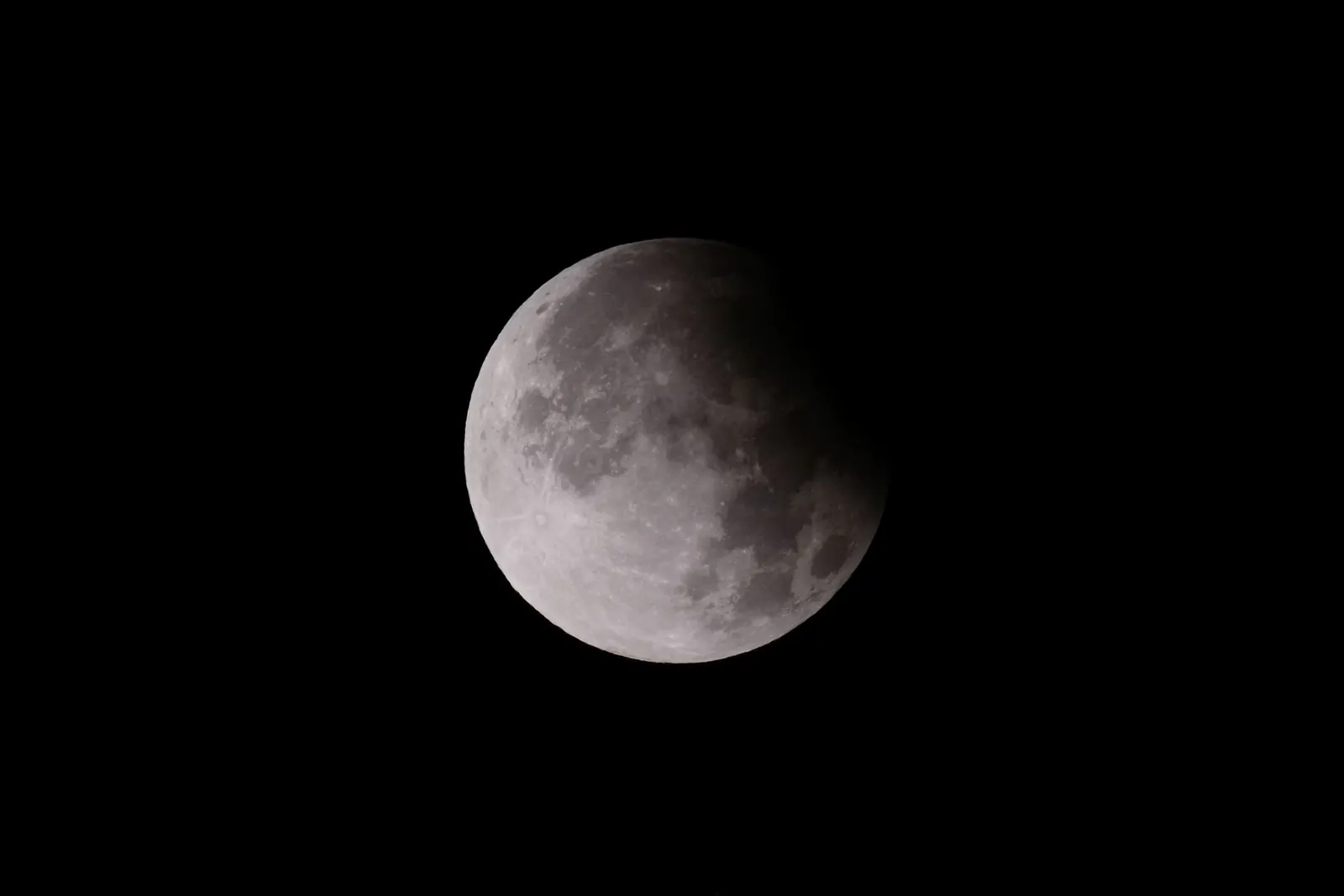
The Rahu-Ketu transit of 2026 begins on 5 December 2026, when Rahu moves from Aquarius into Capricorn and Ketu moves from Leo into Cancer. They stay there until 24 June 2028. So the Rahu Ketu transit 2026 is less a single date than a stretch of about eighteen and a half months, and this page is written for the whole of it rather than for the week it starts.
In the Parashari tradition the Rahu Ketu gochar of 2026 is read as a slow change of emphasis, not as an event that strikes on a given day. The more useful question is which house of your chart each node will occupy for those eighteen months, counted from your Moon sign, so treat everything here as a calendar of themes rather than a forecast.
Rahu Ketu transit 2026 dates at a glance
The dates are as published by PanchangBodh for Indian time. Other panchangs can differ by a few days or even a few weeks, because some use the mean node and some the true node, and they use slightly different ayanamsas.
| Node | Sign from 5 Dec 2026 | Until | Sign before | Sign after |
|---|---|---|---|---|
| Rahu | Capricorn (Makar) | 24 Jun 2028 | Aquarius (Kumbh) | Sagittarius (Dhanu) |
| Ketu | Cancer (Kark) | 24 Jun 2028 | Leo (Simha) | Gemini (Mithun) |
Two things are always true of this pair. Rahu and Ketu sit exactly opposite each other, so when Rahu is in Capricorn Ketu has to be in Cancer, the seventh sign from it. And they change signs together, on the same day.
Why Rahu and Ketu move backwards
Rahu and Ketu are not planets you can see. They are the two points where the Moon's path around the Earth crosses the Sun's apparent path through the sky. Eclipses happen only when a new or full Moon falls close to one of these points, which is why classical texts tie the nodes so closely to grahan.
Those crossing points are not fixed. The Moon's orbit slowly turns, and the crossing points drift westward against the stars, completing a full circle in roughly 18.6 years. In the zodiac that means they move from Aquarius to Capricorn to Sagittarius, the reverse of the order the Sun and Moon travel. Astrologers call this permanent retrograde motion. The mean node never stops or turns direct; the true node wobbles, and now and then moves forward for a short while, but follows the same backward drift over the months.
So "Rahu enters Capricorn" does not mean Rahu has sped up into a new sign. It means the node has slid back out of Aquarius, the sign after Capricorn, and will go on to Sagittarius in 2028.
What the eclipse link means in practice
Because eclipses fall near the nodes, the eclipses of this period line up with the Capricorn-Cancer axis. The annular solar eclipse of 6 February 2027 falls in Capricorn, near Rahu, and the total solar eclipse of 2 August 2027 falls in Cancer, near Ketu; from most of India the August one is seen only as a partial eclipse. Dates, visibility and sutak are covered in our eclipses 2027 guide.
The 12 Moon signs: where Rahu in Capricorn 2026 and Ketu in Cancer fall
For a quick reading, count from your Moon sign (rashi). Rahu's house is where traditional texts look for new hunger, ambition and the unfamiliar; Ketu's house is where they look for detachment, loss of interest and turning inward. The theme column uses the house meanings the Astroliya kundli shows for each house.
| Your Moon sign | Rahu in Capricorn | Ketu in Cancer | Themes the tradition links with the pair |
|---|---|---|---|
| Aries (Mesh) | 10th | 4th | Career and reputation pulled against home and mother |
| Taurus (Vrishabh) | 9th | 3rd | Fortune, teachers and long journeys; quieter effort with siblings |
| Gemini (Mithun) | 8th | 2nd | Change and shared resources; speech and savings looked at closely |
| Cancer (Kark) | 7th | 1st | Partnerships pulled against self and outlook; Ketu over the Moon |
| Leo (Simha) | 6th | 12th | Routines and work habits; rest, travel and letting go |
| Virgo (Kanya) | 5th | 11th | Learning and creativity; gains and friendships sorted through |
| Libra (Tula) | 4th | 10th | Home and mother; career and reputation held more lightly |
| Scorpio (Vrishchik) | 3rd | 9th | Courage and initiative; questioning teachers and beliefs |
| Sagittarius (Dhanu) | 2nd | 8th | Family, speech and savings; change and shared resources |
| Capricorn (Makar) | 1st | 7th | Self and outlook; partnerships; Rahu over the Moon |
| Aquarius (Kumbh) | 12th | 6th | Rest, travel and letting go; routines and work habits |
| Pisces (Meen) | 11th | 5th | Gains and friendships; learning and creativity |
Classical gochar rules treat Rahu and Ketu as most comfortable in the 3rd, 6th and 11th houses from the Moon, the houses of effort, competition and gain. In this period that favours Scorpio (Rahu 3rd), Leo (Rahu 6th), Pisces (Rahu 11th), Taurus (Ketu 3rd), Aquarius (Ketu 6th) and Virgo (Ketu 11th). It is a traditional tilt, not a promise of easy months, and it does not make the other six signs unlucky.
A worked example (an illustration, not a real chart)
Take someone with the Moon in Libra and Gemini rising. From the Moon, Rahu sits in the 4th and Ketu in the 10th, so a rashi-only reading would say "home and career". From the lagna, Rahu sits in the 8th and Ketu in the 2nd, which shifts the emphasis to change, joint money and family speech. Neither node touches the Moon or the lagna, so the Astroliya kundli would show both nodes under "The sky this month" but would not raise the transit as a separate finding. The two readings together are more useful than either alone, which is why a full chart says more than this table.
Why Capricorn and Cancer Moon readers get flagged
If you open your free kundli during this period and see a card titled "Rahu over your natal Moon" or "Ketu over your Lagna", here is the rule behind it. Astroliya's kundli raises a Rahu-Ketu transit as a finding only when one of the two nodes is in the same sign as your natal Moon or your lagna (ascendant), now or within the next few months. That is a common way astrologers decide which node transits to weigh. By Moon sign alone, it picks out two signs of the twelve in each 18-month period; this time those are Capricorn and Cancer.
For this transit, that means:
- Capricorn Moon or Capricorn lagna: Rahu over the Moon or lagna. The tradition reads this as restlessness, new ambitions and a pull towards the unfamiliar.
- Cancer Moon or Cancer lagna: Ketu over the Moon or lagna. The tradition reads this as detachment, introspection and letting go of old patterns.
- Everyone else: no node finding from this transit, though "The sky this month" still shows which house each node is passing through.
Without a birth time the kundli cannot know your lagna, so it checks the Moon alone. With a birth time it checks both, and it shows the dates, the sign and the reasoning on the card. If you are a Capricorn or Cancer Moon, your Capricorn horoscope or Cancer horoscope gives the day-to-day picture beside it.
What being flagged does not mean
- It is not a dosha. Kaal Sarp, for example, is a pattern in the birth chart and does not switch on or off with transits; see our Kaal Sarp Dosh explainer for how that is actually checked.
- It is not a "Rahu period". A transit is where Rahu is in the sky now; a dasha is a timeline unique to your birth chart. You can have Rahu over your Moon with no Rahu dasha at all. Our Rahu Mahadasha guide explains the difference.
- It does not predict a specific loss, illness or break-up. Classical texts describe moods and areas of emphasis, and they weigh them against everything else in the chart.
How this transit meets Jupiter and Saturn
Transits are never read alone. Two overlaps stand out in this period, using dates from PanchangBodh.
- Jupiter with Ketu in Cancer (25 Jan to 26 Jun 2027). Jupiter returns to Cancer, while retrograde, on 25 January 2027 and moves back into Leo on 26 June 2027. For those five months Jupiter shares Cancer with Ketu, and from Cancer its seventh-house aspect falls on Rahu in Capricorn. Many astrologers read Jupiter's aspect on the nodes as steadying. The dates and the house for each Moon sign are in our Guru Gochar 2027 guide.
- Saturn into Aries (from 3 June 2027). When Saturn enters Aries it begins dhaiya for Capricorn Moon readers, Aries being the 4th from Capricorn. So a Capricorn Moon with Rahu overhead also has Saturn's 4th-house transit for part of this period. Saturn goes back to Pisces on 20 October 2027 and settles in Aries on 23 February 2028; the Shani Gochar 2027 guide has the detail.
An overlap is a reason to read your own chart, not a reason for alarm. The same overlap can look very different depending on the lagna and the running dasha.
Rahu, the 12th house and foreign moves
Rahu is traditionally the karaka of the foreign and the unconventional, so this transit often brings questions about travel and settling abroad. For Aquarius Moon readers Rahu passes through the 12th from the Moon, a house linked with distant places and letting go; for Taurus Moon readers it passes through the 9th, linked with long journeys. A transit alone is never read as a visa or a move. Astrologers look for a natal promise first, through the 4th, 9th and 12th houses and their lords, and then for timing through dasha. Our guide to foreign settlement in a kundli walks through those checks.
What people traditionally do during a node transit
Remedies for Rahu and Ketu are traditionally recommended, never required, and they are no substitute for medical, legal or financial advice. If you find them meaningful:
- Keep a routine. Rahu is said to scatter attention, so many people simply return to a fixed time for sleep, work and prayer.
- Chant or listen to a mantra. Durga is traditionally linked with Rahu and Ganesha with Ketu; the mantra tool picks one from your chart and keeps count on a mala.
- Give quietly. Popular practice ties Rahu worship to Saturdays and Ketu worship to Tuesdays, so many people give on those days, as much as they can comfortably afford.
- Delay big, impulsive decisions by a few days. It is ordinary advice, and the tradition happens to agree.
If you want to talk a specific situation through, an AI astrologer can read the transit against your own chart and show the reasoning.
Questions people ask
When does the Rahu Ketu transit 2026 start and end?
Rahu enters Capricorn and Ketu enters Cancer on 5 December 2026, as published by PanchangBodh. Both stay until 24 June 2028, when Rahu moves back into Sagittarius and Ketu into Gemini. A panchang using the true node may date it a few days or weeks apart.
Is Rahu in Capricorn bad?
Classical texts do not call any sign of Rahu simply good or bad. Some read Rahu as comfortable in Saturn's signs, and the 3rd, 6th and 11th houses from the Moon are traditionally the easiest places for it. What it means for you depends on the house it crosses in your chart and your running dasha.
Why does my kundli say Ketu is over my Moon?
Your Moon is in Cancer, or your lagna is, and Ketu is in Cancer from 5 December 2026 to 24 June 2028. The kundli flags a node transit only when Rahu or Ketu shares a sign with your natal Moon or lagna, and it shows the dates and the rule on the card.
Does this transit cause Kaal Sarp Dosh?
No. Kaal Sarp Dosh is read from the birth chart, when all seven planets fall on one side of the natal Rahu-Ketu axis. Transiting nodes do not create or remove it.
Should I read this from my Moon sign or my lagna?
Both, if you know your birth time. The Moon sign gives the traditional gochar reading in the table above, and the lagna gives the houses in your own chart. Your free kundli shows both side by side.
From the Astroliya store
Pieces for this guide
Chosen from our own store to go with what you just read.


