

Pitru Paksha 2027: Dates, Choosing the Shraddha Day and Sarva Pitru Amavasya
Which day of Pitru Paksha 2027 is your family's? No printed list can say: it is the day your ancestor's tithi is running in the afternoon, somewhere between Thursday 16 September and Sarva Pitru Amavasya on Wednesday 29 September, the day kept for anyone whose tithi is not known.
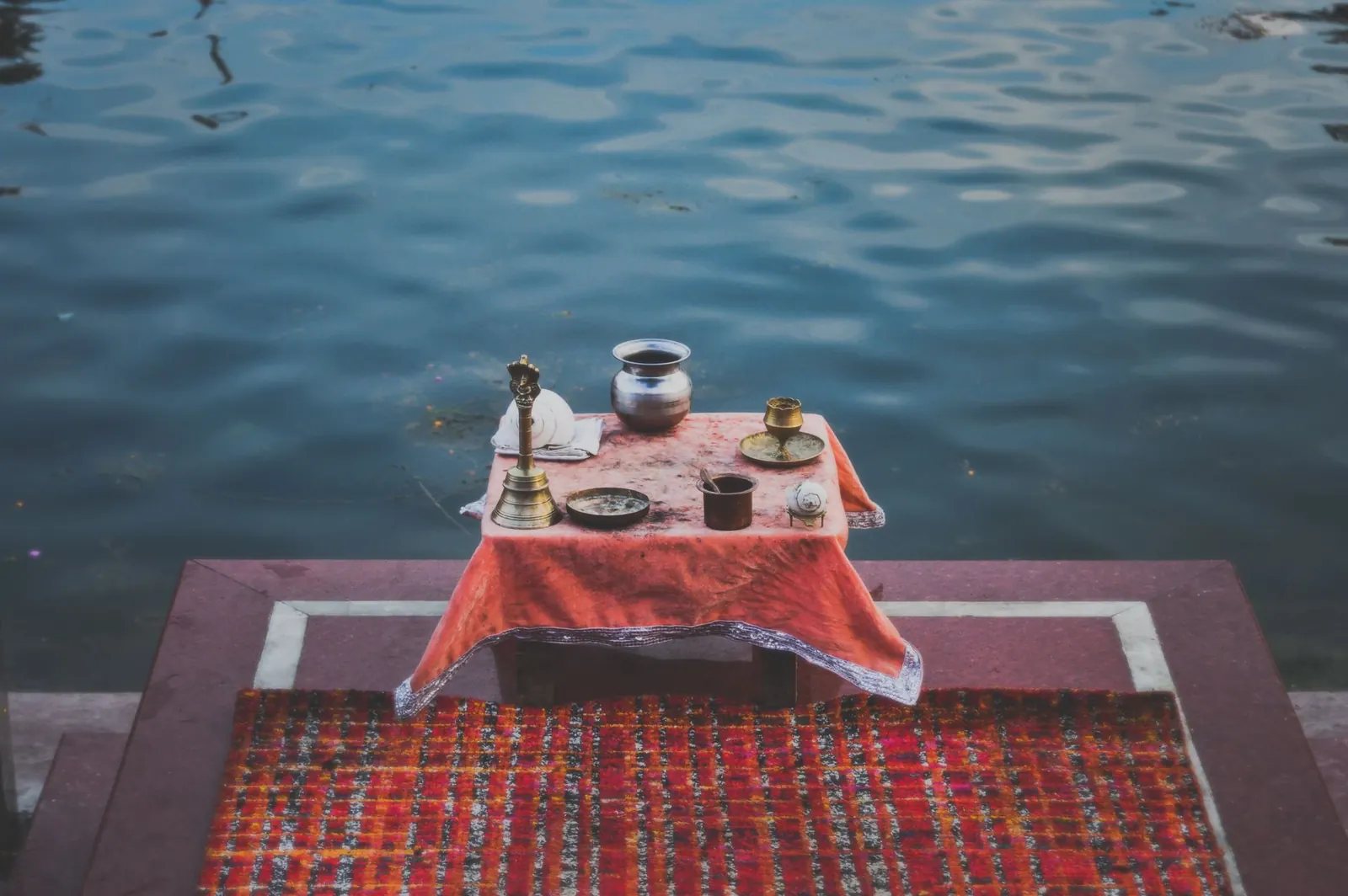
Pitru Paksha 2027 begins on Thursday, 16 September and ends with Sarva Pitru Amavasya on Wednesday, 29 September. For about two weeks, families across India remember their parents, grandparents and the generations before them with shraddha, tarpan and food given in their names. Most people searching for shradh 2027 dates want one answer: which of those days is ours? It is set by the tithi on which the person died, not the calendar date, so the same grandparent's shraddha falls on a different calendar date each year.
Pitru Paksha 2027 dates: Thursday 16 September to Wednesday 29 September
Pitru Paksha, also called Shraddha Paksha or Mahalaya Paksha, is the dark fortnight (Krishna Paksha) of the lunar month of Ashwin in the Purnimanta calendar used across north India; Drik Panchang lists it as Ashwin Krishna. In the Amanta calendar followed in much of the south and west, where months end on the new moon, the same fortnight is counted as the dark half of Bhadrapada. The days are the same; only the month name differs, which is why one family calls it Ashwin and another calls it Bhadrapada.
| Pitru Paksha 2027 | Date (New Delhi) | What it is |
|---|---|---|
| Pitru Paksha begins | Thursday, 16 September | Krishna Pratipada, the first day as listed by Drik Panchang |
| Sarva Pitru Amavasya | Wednesday, 29 September | The closing day, kept for every ancestor |
| Sharad Navratri begins | Thursday, 30 September | Shukla Pratipada, the day after the fortnight closes |
Some panchangs count the Purnima shraddha, for those who died on a full-moon day, as the opening of the fortnight, and others begin with Pratipada the next day. That is a difference in counting, not in the rites. The fortnight closes and Navratri 2027 begins the very next morning, so many households move straight from remembering the ancestors to installing the kalash for Durga.
Which day is your family's shraddha: the tithi rule
Shraddha is not kept on the calendar date someone died. It is kept on the tithi, the lunar day, of their death. Whether the person died in the bright or the dark half of the month does not matter: someone who died on a Shukla Panchami and someone who died on a Krishna Panchami are both remembered on the Panchami of Pitru Paksha.
The steps most families follow:
- Find the tithi of death. If the family already remembers it ("Nanaji's shraddha is on Ashtami"), use that. If you only know the calendar date, look that date up in a panchang for the city where the death happened and note the tithi running at the time.
- Find that tithi inside the fortnight. Open a panchang for Pitru Paksha 2027 and find the day on which that tithi is running in the afternoon, not just at sunrise (the next section explains why).
- Check the special days. Some deaths are traditionally remembered on a fixed day rather than their own tithi (see the table below).
- If you cannot find the tithi at all, keep the shraddha on Sarva Pitru Amavasya.
We have not printed a day-by-day tithi table for 2027. Tithis start and end at different clock times every day, and a tithi can occasionally be skipped or stretch over two afternoons, so a single national table would mislead some readers. Astroliya's free panchang shows the tithi for your own city on any date, and Drik Panchang publishes a city-wise shraddha list each year.
Days kept by tradition for particular deaths
| Situation | Day traditionally used |
|---|---|
| Tithi of death known | That tithi in Pitru Paksha |
| Tithi of death not known, or forgotten | Sarva Pitru Amavasya |
| Died on Purnima | Purnima shraddha at the start of the fortnight, or Amavasya in some families |
| Died on Chaturdashi of natural causes | Many families shift the rite to Amavasya |
| Untimely death (accident, violence) | Chaturdashi, kept for such deaths in many regions |
| Married woman who died before her husband | Navami, often called Matri Navami or Avidhava Navami |
| Sannyasi or renunciant | Dwadashi in many traditions |
These are customs, and regions and families differ. A family priest or the elders of the family usually know which one your household follows, and their answer settles it.
Why shraddha is done in the afternoon: the aparahna rule
Classical texts on dharma divide the daylight hours into five equal parts: pratah (early morning), sangava, madhyahna (midday), aparahna (afternoon) and sayahna (evening). Shraddha belongs to the fourth part, the aparahna. Morning is given to the gods; the afternoon, as the sun turns west, is traditionally the time of the ancestors.
This is the most useful of the shraddha rules to understand, because it decides the date. Panchangs choose the shraddha day by asking which day has the required tithi during the aparahna, not which day has it at sunrise. Most of the time the two agree. When a tithi begins around midday, they do not, and that is why two calendars can appear to disagree about the same family's shraddha.
Within the day, panchangs also list two short windows, Kutup muhurta and Rauhina muhurta, around midday and early afternoon, which many families prefer for the offering itself. The exact clock times depend on your sunrise and sunset, so look them up for your city rather than copying another city's times.
Tarpan and shraddha: what is actually done
The name shares its root with the everyday word shraddha, faith or sincere intent, and the rite is simpler than its reputation. What families commonly do:
- Tarpan: water mixed with black sesame (til) and kusha grass is offered from cupped hands, with the names of the father, grandfather and great-grandfather on both sides of the family, by tradition.
- Pind daan: small balls of cooked rice, barley flour or sesame, offered as food for the ancestors. Some families do this at home; others go once in a lifetime to a tirtha such as Gaya, Varanasi or Prayagraj.
- The meal: food the departed person liked is cooked plainly, usually without onion and garlic. A portion is set aside for a crow, a cow and a dog, and the meal is offered to Brahmins or to anyone in need.
- Giving: clothes, grain or money given in the ancestor's name. Many families now give the same meal, or its cost, to an old-age home, a hospital kitchen or a school.
Traditionally the eldest son performs the rite, but practice has widened: daughters, wives, younger sons and grandchildren perform shraddha in many families today, and a simple, sincere offering is preferred over an elaborate one done grudgingly. During the fortnight some people also avoid cutting hair, eating non-vegetarian food or alcohol. These are observances people choose; nothing bad is said to follow from keeping a lighter version.
Sarva Pitru Amavasya 2027: Wednesday 29 September
Sarva Pitru Amavasya 2027 falls on Wednesday, 29 September (New Delhi). The name means "the new moon of all ancestors", and it is the one day in the fortnight when every ancestor can be remembered together. It is also called Mahalaya Amavasya; in Bengal, Mahalaya is the morning when the countdown to Durga Puja begins.
Families keep it for several reasons:
- the tithi of death is not known, or the records are lost;
- the shraddha on the proper tithi was missed because of travel, illness or work;
- the family wants to remember relatives beyond the usual three generations, friends, teachers or those who had no one to remember them.
If you can do only one day of the fortnight, this is the day tradition offers. Panchangs apply the same afternoon rule to Amavasya, so in a year when Amavasya begins late in the day the listed date can differ from the sunrise calendar. Check your city.
Pitru Paksha and pitra dosh: what the chart term means
Many people find this fortnight after being told, often at a hard moment, that their kundli has pitra dosh. The two are related in tradition, but they are not the same thing, and neither should frighten you.
Pitra dosh is a name astrologers give to certain chart combinations, most commonly the Sun with Rahu or Ketu, or Rahu in the 9th house, said to point to an unsettled bond with one's ancestors. Our pitra dosh guide explains how it is read and why the long symptom lists online describe ordinary life. Here is what it does not mean:
- It does not mean an ancestor is angry with you, or that your family is cursed.
- It does not explain illness, debt, delayed marriage or quarrels. Those need a doctor, an adviser or a lawyer first.
- It does not require an expensive puja. The practices tradition points to are the ones on this page: shraddha, tarpan and feeding others, which cost little and are kept by families who have never had a chart read.
If you want to see whether either combination is in your own chart, Astroliya's free kundli checks for it in the Doshas tab and shows whether it is present in your chart. Pitru Paksha is simply the season when families do what the tradition recommends anyway.
Buying and starting new things during Pitru Paksha
Customs vary more here than anywhere else. Many families do not buy gold, vehicles or new clothes during the fortnight, and weddings, engagements, griha pravesh and other new beginnings are generally not scheduled in it; most muhurat lists skip these days. The reasoning offered is that the fortnight is for remembrance, not celebration.
Other families see no problem with ordinary purchases, and buying something needed for the home or for work is not forbidden in any rule that all traditions share. If your family has a custom, follow it; if it does not, there is no reason to postpone a necessary purchase out of fear. For something you can wait on, Navratri begins the day after Sarva Pitru Amavasya, and the festival season runs through to Diwali. Astroliya's festival calendar lists the dates.
Questions people ask
Can shraddha be done on a day other than the tithi?
Yes. Tradition treats Sarva Pitru Amavasya as the day for any shraddha that could not be done on its tithi, whether the tithi was unknown or simply missed. Many families also keep a yearly shraddha on the death anniversary tithi outside Pitru Paksha.
Can women perform shraddha and tarpan?
The classical texts assign it to sons, but many families today have daughters, wives and daughters-in-law perform it, and the regional customs about this have always varied. What tradition stresses most is sincerity, not who holds the water.
Is it bad luck to be born, or to start a job, during Pitru Paksha?
No. Being born in this fortnight carries no special meaning in the classical reading of a chart, and an ordinary job joining or a necessary purchase is a matter of family custom. Large ceremonies like weddings are usually scheduled after it, mainly because muhurat lists skip these days.
Do I need to know my ancestor's birth chart for shraddha?
No. Shraddha needs only the tithi of death, and if that is unknown, Sarva Pitru Amavasya covers it. Birth charts play no part in the rite. If you have questions about your own chart, Astroliya's AI astrologer can read it from your birth details and explain its reasoning.
Why do two calendars show different dates for the same shraddha?
Usually because one lists the tithi at sunrise and the other applies the afternoon rule, or because they are set to different cities. Use a panchang for the city where the rite will be performed, and follow the aparahna listing.
From the Astroliya store
Pieces for this guide
Chosen from our own store to go with what you just read.


