

Akshaya Tritiya 2027: Date, the Sunrise Rule and What People Buy
Why is Akshaya Tritiya 2027 on Sunday 9 May when, in New Delhi, the Tritiya tithi begins on Saturday afternoon and is over by 09:03 AM on Sunday? Most panchangs give the festival to the day whose sunrise falls inside the tithi, which leaves Sunday's puja window short: 05:35 to 09:03 AM.
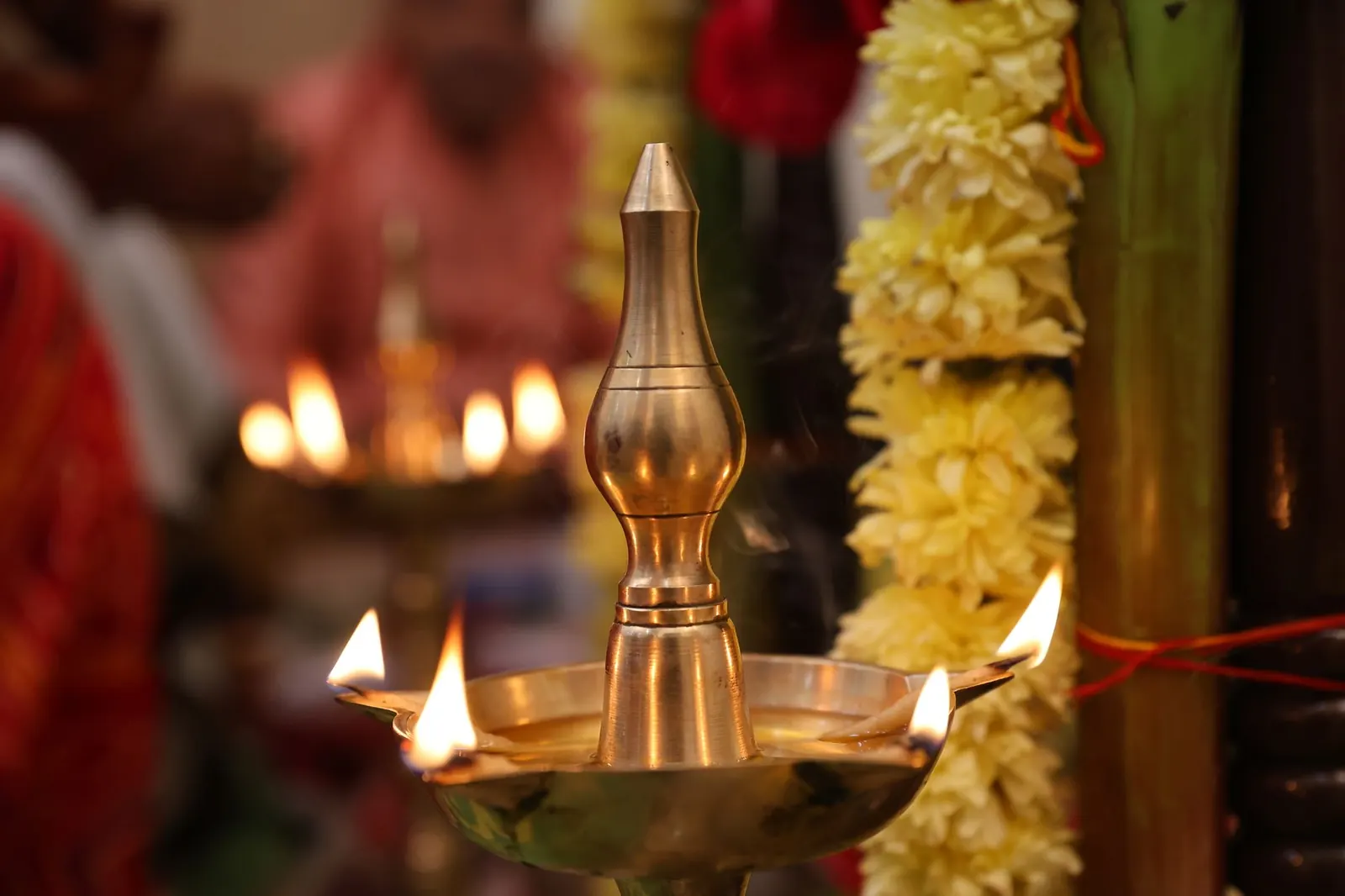
Akshaya Tritiya 2027 falls on Sunday, 9 May 2027 (New Delhi; check your city). It is the third lunar day of the bright fortnight of Vaishakha, and across much of India it is treated as one of the most auspicious days of the year: a day to buy a little gold, give in charity, start a venture or move into a new home. In Rajasthan, Gujarat and Madhya Pradesh many people know it as Akha Teej. Buying is the custom people talk about most, yet nothing needs to be bought for the day to count.
Akshaya Tritiya 2027 date and timings at a glance
The figures below are for New Delhi, as published by Drik Panchang for 2027. Sunrise moves with your location, so the morning window starts and ends at slightly different times in other cities.
| What | New Delhi, 2027 |
|---|---|
| Akshaya Tritiya | Sunday, 9 May |
| Tritiya tithi begins | 11:42 AM, Saturday 8 May |
| Tritiya tithi ends | 09:03 AM, Sunday 9 May |
| Puja muhurat | 05:35 AM to 09:03 AM, 9 May |
| Buying window listed for 8 May | 11:42 AM on 8 May to 05:35 AM on 9 May |
| Buying window listed for 9 May | 05:35 AM to 09:03 AM |
Notice something that confuses many people every year: the Tritiya tithi actually begins on Saturday afternoon and has already ended by mid-morning on Sunday. Yet the festival is Sunday. The next section explains why.
How the date is decided: Tritiya at sunrise
A tithi is a lunar day, the time the Moon takes to move twelve degrees ahead of the Sun. It does not line up with our midnight-to-midnight calendar day, so a tithi often starts on one date and ends on the next. Every festival therefore needs a rule saying which calendar day "owns" it.
For Akshaya Tritiya the rule, as most published panchangs apply it, is a sunrise rule. The day whose sunrise falls inside Vaishakha Shukla Tritiya is the festival day. Most years that settles it at once: only one sunrise falls inside the tithi.
The tricky years are those where the tithi touches neither sunrise cleanly. Astroliya's own festival calendar uses this test, drawn from the classical rule:
- Find the two calendar days the Tritiya tithi spans.
- If Tritiya is running at sunrise on the later day and continues for at least three muhurtas after that sunrise, the later day is Akshaya Tritiya.
- If it ends sooner than that after the later sunrise, the festival goes to the earlier day, the day on which the tithi began.
A muhurta here is one fifteenth of the daytime, from sunrise to sunset. In early May, New Delhi has roughly thirteen and a half hours of daylight, so one muhurta is a little under an hour and three muhurtas come to about two hours and forty minutes.
The 2027 case, worked through
- On Saturday 8 May, Tritiya begins at 11:42 AM, well after sunrise. Saturday's sunrise is still in Dwitiya, the second tithi.
- On Sunday 9 May, sunrise is at about 05:35 AM and Tritiya runs until 09:03 AM, about three and a half hours after sunrise.
- That is longer than three muhurtas, so Sunday passes the test and is Akshaya Tritiya.
The same rule can give a different civil date far from India. In New York, for example, the tithi already holds Saturday's sunrise and ends before Sunday's, so Astroliya's calendar, cross-checked against Drik Panchang, keeps Akshaya Tritiya 2027 there on Saturday 8 May. The festival is the same; the sunrise is not.
When the date shifts
Now take an illustration, not a real year: suppose Tritiya began at 08:00 AM one day and ended at 07:00 AM the next, about ninety minutes after sunrise. The later day touches the tithi at sunrise but holds it for less than three muhurtas, so the earlier day, on which Tritiya began, would be kept instead. Years like this are uncommon, and they are exactly when different calendars, and families following different traditions, can end up a day apart. If your family calendar and a website disagree, this rule is usually the reason, not an error on either side.
Why the day is called akshaya
"Akshaya" means imperishable, something that does not diminish. The belief behind the festival is simple: what you begin, give or offer on this day is said to keep its value. That idea is why charity and new beginnings sit at the centre of the day, more than purchases.
Several traditions gather around the date, and they vary by region and community:
- Many Puranic traditions associate the day with the start of the Treta Yuga, one of the four ages in Hindu cosmology.
- Parashurama, the sixth avatar of Vishnu, is widely remembered around this time, and some calendars mark Parashurama Jayanti on or near the same date.
- A popular story links the day to Sudama's visit to Krishna with a small bundle of beaten rice, and to the abundance that followed. It is told as a lesson about giving, not about getting.
- In the Jain tradition the day recalls the first Tirthankara, Rishabhadeva, breaking a long fast with sugarcane juice, and many Jains complete the year-long Varshitap on this day.
- In farming regions, Akha Teej has long marked a time to look ahead to the coming sowing season.
Notice that none of these stories is about shopping. The buying custom grew later from the idea that wealth acquired on an akshaya day lasts.
Is the whole day auspicious? The abujh muhurat belief
In popular tradition Akshaya Tritiya is called an abujh muhurat, a day so auspicious that you need not consult anyone before beginning something. That is why people book weddings, griha pravesh, vehicle deliveries and shop openings on it without a separate muhurat.
Two things are worth knowing before you rely on that belief:
- It is a tradition, and an old and widely shared one, but classical muhurat practice still looks at the hour. Rahu Kaal, for example, is avoided by many families even on festival days.
- For larger events, especially marriage, astrologers traditionally also read the charts of the people involved. A day can be generally good and still not be the best fit for one couple.
If you are planning something specific, such as a griha pravesh or a business launch, the muhurat finder lists good windows for the occasion in your own town, showing the nakshatra and tithi of each and leaving out Rahu Kaal. Set the start date to 9 May to see whether the finder lists a window that day. The muhurat finder and the panchang tool both ask you to sign in, because they work from the town saved in your profile.
Akshaya Tritiya: what to buy, and what not to read into it
The most common question about the day is what to buy. Here is what people traditionally buy or begin, what each is, and what we do not claim.
| What people buy or do | What it is | What we do not claim |
|---|---|---|
| Gold, even a small coin | The classic Akshaya Tritiya purchase, tied to the idea that what is gained today lasts | That gold bought today will rise in value. Prices move with markets, not the calendar |
| Silver, or a silver item for the puja room | A lighter alternative, often a coin or a small vessel | Any effect on your finances |
| New account, savings plan or business ledger | A symbolic fresh start, popular among traders | That a start date replaces planning or advice |
| Grain, water pots, clothes or fans for others | Charity, which many families consider the heart of the day | Nothing. Giving is its own reward |
| A devotional or vastu decor piece | A small item for the puja corner or desk | That it brings money |
If you would like a small devotional piece instead of jewellery, our store carries a Lakshmi Yantra Pyramid with a raw pyrite stone, described on its listing as a traditional symbol of Lakshmi for a puja space, office or shop, and a few more pieces in the spiritual and vastu decor collection. Treat them as decor and a reminder of intention, nothing more. Our guide to the Lakshmi yantra pyramid covers what it is and where people place it.
You do not have to buy anything
This is worth saying plainly. Nothing in the traditions behind the day says that a purchase is required. A family that lights a lamp, offers a simple puja to Lakshmi and Vishnu, gives food or water to someone who needs it, and starts one good habit has kept Akshaya Tritiya fully. Do not stretch a budget, take a loan or buy in a hurry because of the date. Any financial decision deserves the same care on 9 May as on any other day, and it is best made with proper financial advice rather than a calendar.
How the day is traditionally kept
Customs differ by region, but a typical morning looks like this:
- Wake early, bathe, and wear clean clothes before sunrise if you can.
- Offer puja to Vishnu and Lakshmi during the morning window, with tulsi leaves, yellow flowers, rice and a lamp. Some families also offer to Kubera or to Ganesha first.
- Give in charity: water pots, grain, clothes or seasonal fruit are common, as the day falls in the heat of early summer.
- Begin whatever you planned to begin, whether a purchase, a new book of accounts, a course of study or a new habit.
Some people fast until the puja is done. That is a personal choice, not a requirement, and anyone with a health condition should follow their doctor's advice rather than a fasting custom.
Akha Teej 2027 and weddings in May
In Rajasthan, Gujarat and parts of Madhya Pradesh, Akha Teej 2027 is the same day as Akshaya Tritiya, Sunday 9 May. Because of the abujh muhurat belief, it has long been a popular wedding day in those regions, often chosen without a separate muhurat.
If you are fixing a wedding date, though, the festival alone is not how most families decide. Our guide to vivah muhurat 2027 explains how marriage dates are traditionally chosen and which months have them, and the muhurat finder can show marriage windows for your town.
How Akshaya Tritiya compares with Dhanteras
Akshaya Tritiya and Dhanteras are the two days of the year most associated with buying gold, but they work differently:
| Akshaya Tritiya | Dhanteras | |
|---|---|---|
| Tithi | Vaishakha Shukla Tritiya | Kartika Krishna Trayodashi (Ashwin in some calendars) |
| How the day is chosen | Tithi at sunrise, with the three-muhurta test | Tithi during Pradosh Kaal, after sunset |
| Main time | Morning | Evening |
| Spirit of the day | Lasting merit, charity, new beginnings | Health, prosperity and the start of Diwali |
Our Dhanteras guide explains its evening rule, and the Diwali guide covers the five days that follow.
Questions people ask
Is Akshaya Tritiya 2027 on 8 May or 9 May?
It is on Sunday, 9 May 2027 in New Delhi. The Tritiya tithi begins on Saturday afternoon, but the festival goes to the day whose sunrise falls in Tritiya and where Tritiya then lasts at least three muhurtas, which is Sunday. Check your own city in a panchang, as sunrise times differ.
What is the Akshaya Tritiya 2027 shubh muhurat?
Drik Panchang gives the puja muhurat for New Delhi as 05:35 AM to 09:03 AM on 9 May 2027. It also lists a buying window from 11:42 AM on 8 May, when Tritiya begins. Timings shift with sunrise, so look up your own town.
Do I need to buy gold on Akshaya Tritiya?
No. Buying gold is a popular custom, not a rule, and nothing in the traditions behind the day requires a purchase. Charity, a simple puja and a good new beginning are considered just as much a way of keeping the day.
Is Akha Teej the same as Akshaya Tritiya?
Yes. Akha Teej is the name used in Rajasthan, Gujarat and nearby regions for the same festival, Vaishakha Shukla Tritiya. In 2027 both fall on Sunday 9 May.
Can I do griha pravesh or start a business on Akshaya Tritiya without a muhurat?
Tradition treats the day as an abujh muhurat, so many families do. Others still choose a good hour within the day and avoid Rahu Kaal, which the muhurat finder can show for your town. Either way, practical readiness matters more than the date.
From the Astroliya store
Pieces for this guide
Chosen from our own store to go with what you just read.


